Why Corten steel needs so little care
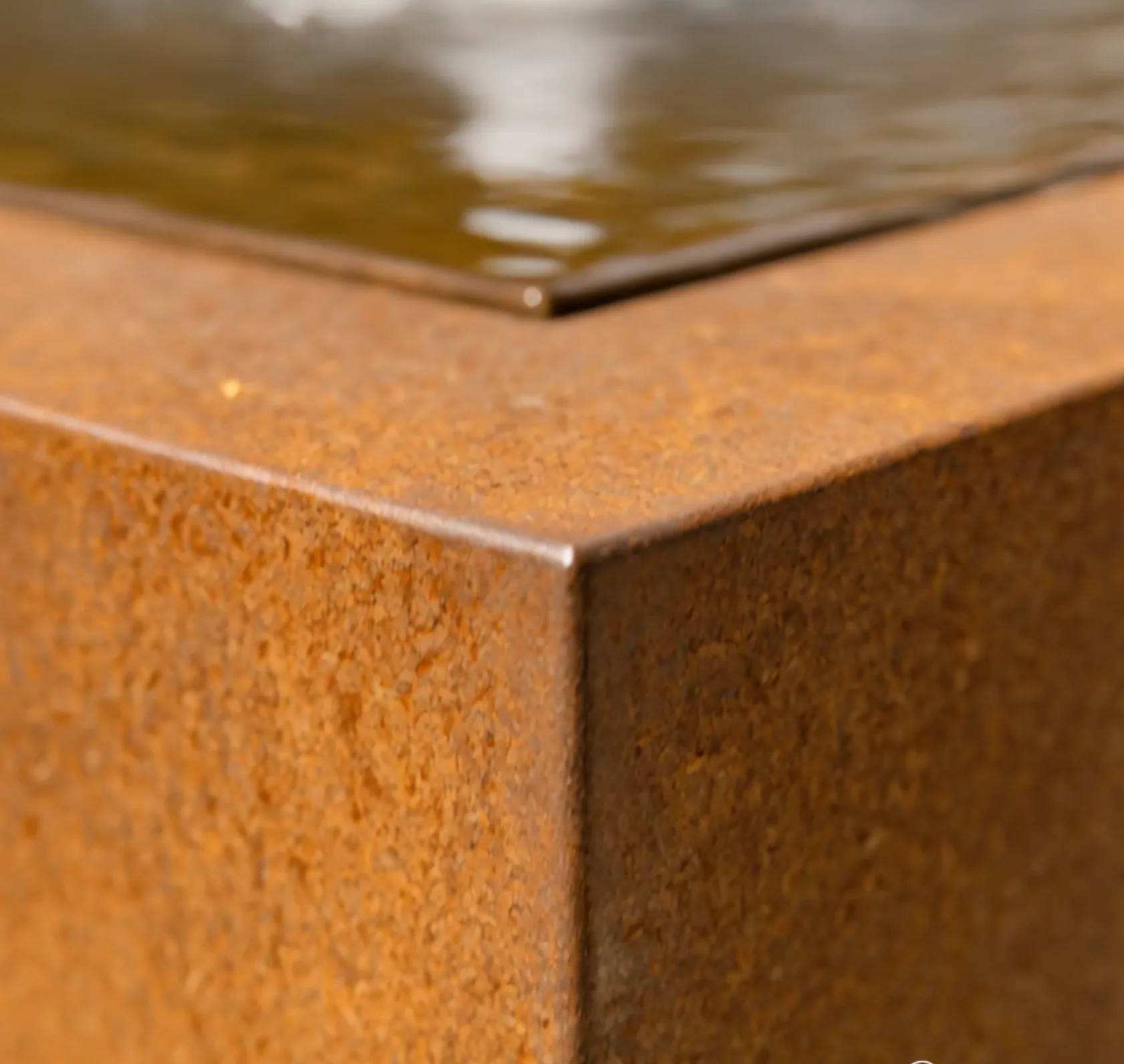
Corten steel is a low-alloy steel: the copper, chromium, nickel and phosphorus it contains turn its rust into a dense, tightly bonded layer that greatly slows corrosion. That layer is the patina. It is born of the alternation between rain and drying, renews itself and closes over small scratches. Where ordinary steel has to be painted and repainted, Corten needs only one thing: to be able to dry.
All Corten steel maintenance follows from this principle. Anything that holds water against the metal, whether dead leaves, packed soil or a puddle in a corner, disturbs the patina. Anything that lets the air circulate helps it. Our Corten steel guide explains the chemistry of the material; here, the focus is on what to do.
The first months: what will change
A raw sheet of Corten leaves the mill grey, then mottles into light and dark patches for weeks before evening out. Cortenys pieces spare you that stage: the signature patina is applied and inspected in the workshop, piece by piece, and the colour is deep and even from the day of delivery.
After that, everything depends on the finish you choose. Raw, that is, delivered with its patina but without varnish, the piece goes on living: its colour deepens towards brown, shifts with exposure and rainfall, and gains depth over the seasons. During this maturing period, rain can still carry away a few oxide particles. Varnished, the piece keeps exactly the colour chosen in the workshop, without changing and without run-off.
Everyday care, step by step
- Clear away leaves, soil and debris that build up at the foot or on top of your pieces: they keep moisture against the metal.
- Empty standing water from a corner, a tabletop or a hearth after rain, and remove wet ashes from a fire pit.
- Rinse with clean water if the piece is dusty or marked by deposits, using a garden hose and a soft sponge.
- Let it dry: sun and wind do the rest.
- For a varnished piece, a wipe with a damp sponge is enough.
For planters, think about drainage: water from watering must never be left to stagnate at the bottom. For fountains and water basins, care is mostly about the water, which must stay clear and be renewed; our guide Installing a Corten steel fountain covers this in detail.
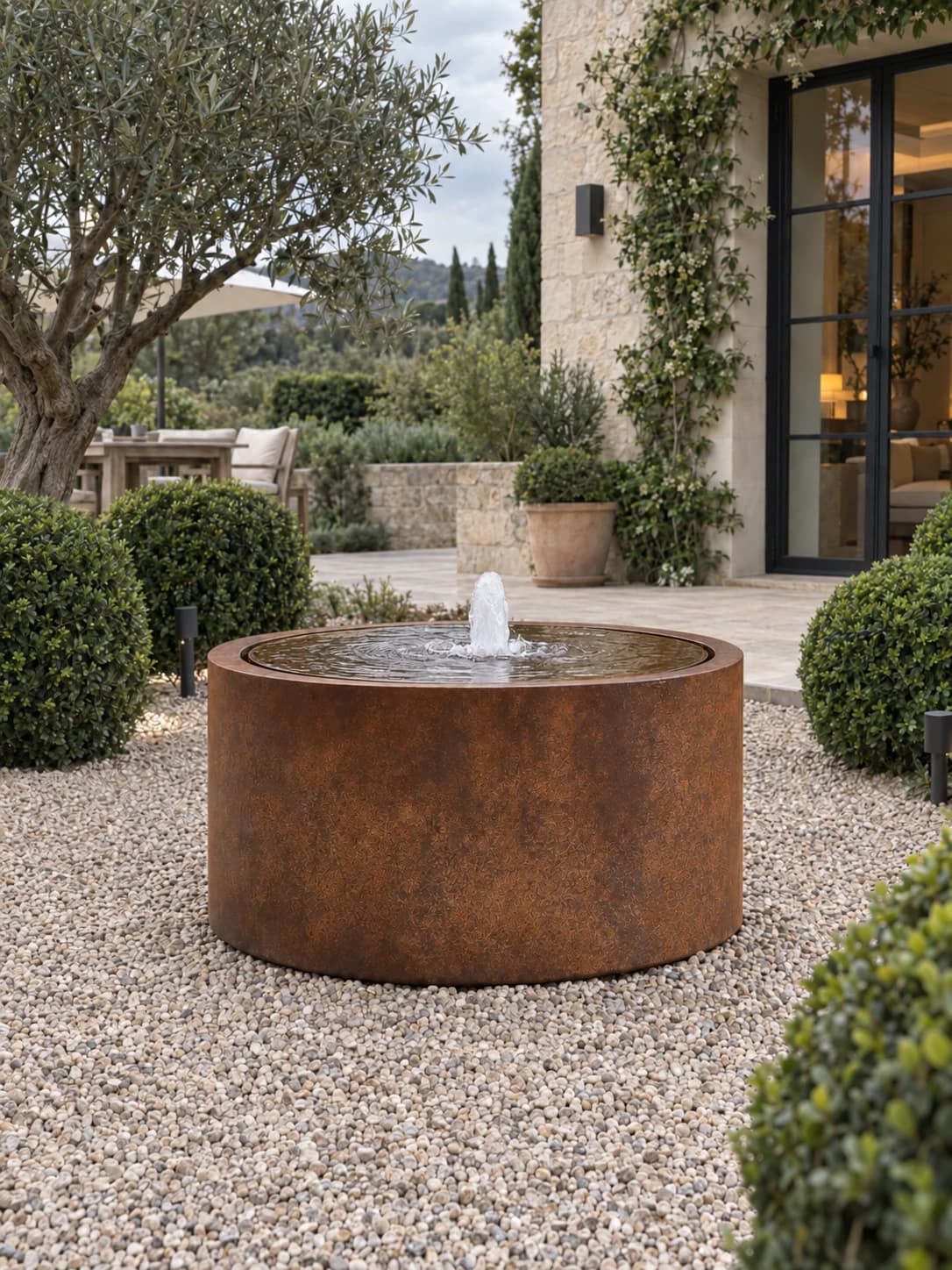
Elio round fountain
The Elio round fountain, set on a bed of gravel: the base can breathe, and any run-off disappears into the gravel.
Run-off and Corten rust stains: prevent, then remove
Preventing run-off
Run-off is the most common concern with Corten steel in the garden, and it is temporary. It comes from rain running over a raw piece as it matures and depositing oxide particles on pale, porous surfaces: limestone, travertine, exposed-aggregate concrete, grout joints. A few precautions are enough:
- stand the piece on a bed of gravel or pebbles, which absorbs the run-off and makes it invisible;
- or on a dark slab, a tray or discreet spacers that lift the metal off the ground;
- direct the run-off towards soil or a flower bed rather than towards the terrace;
- for precious stone, a poolside or pale coping, choose the protective varnish, which keeps run-off at bay.
Removing a rust stain from a patio
If a mark appears despite everything, act quickly: a fresh stain comes out far more easily than an old one. First scrub with clean water and a soft brush. If the mark persists, cleaners based on oxalic acid, sold for stone and concrete, are the most common answer to rust stains. Always test the product on a discreet area, follow the manufacturer’s instructions, rinse thoroughly and never apply it to the Corten steel piece itself.
Limestone and marble are sensitive to acids: if in doubt, entrust the cleaning to a stone specialist. Bleach, for its part, is to be avoided: it does not dissolve rust and can spread the stain.
The protective varnish: who it is for, and why
The Cortenys protective varnish is colourless. Applied by hand in the workshop, on a patina that has reached maturity, it seals the oxidation and fixes the colour of the Corten steel in the chosen state. It slightly deepens the nuances and gives them a discreet satin sheen, prevents run-off and makes the surface very easy to clean.
- Outdoors, it is a choice: recommended beside a swimming pool, on a pale stone terrace and anywhere the slightest mark would be unwelcome.
- Indoors, it is mandatory at Cortenys: every piece destined for the home is varnished in the workshop, to protect floors, walls and fabrics.
- The choice is made when ordering. For a piece already in place, contact the House: every request is considered.
- Fire pieces are the exception: fire tables, fire pits, outdoor fireplaces and flame lanterns are offered in their signature patina, without varnish.
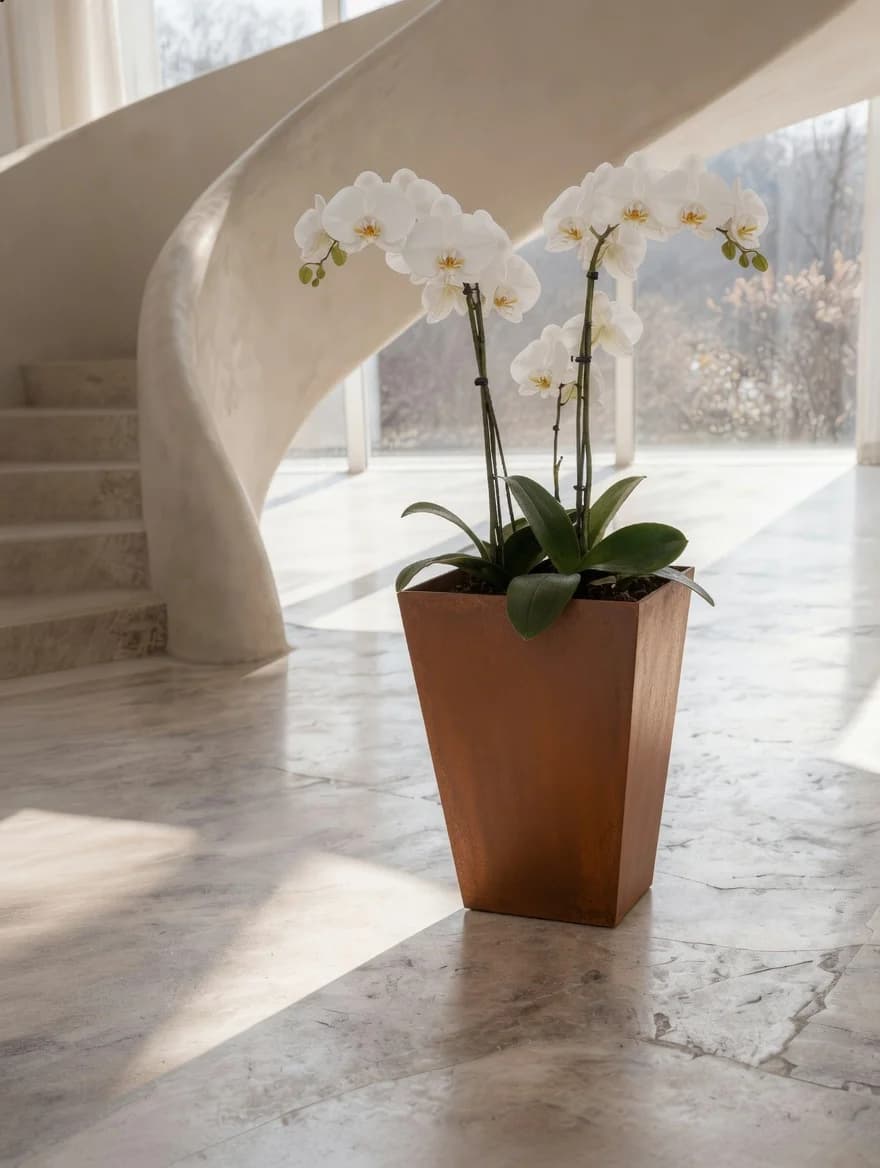
Daphné flared pot
Indoors, varnish is mandatory: the Daphné flared pot keeps its patina without marking anything around it.
Raw or varnished, there is no wrong choice outdoors. Raw, Corten steel tells the story of your garden’s climate; varnished, it keeps the colour you fell for. The protective varnish page describes the finish in detail.
Scratches, knocks and marks of use
On a raw piece, a scratch first reveals a paler steel, then the patina re-forms of its own accord within a few weeks of rain and sun: the mark melts back into the surface. Do not attempt a paint touch-up or an anti-rust product, which would leave a lasting trace. On a varnished piece, a deep scratch can break through the varnish: contact the House, which will advise you.
Around a fire, heat can darken the surface locally. It is the mark of use, which the patina absorbs over the seasons; it does not affect the soundness of the piece.
Coast, swimming pool, de-icing salt: the special cases
Chlorides are the enemies of the patina. Sea spray, chlorinated or salt water from a swimming pool and de-icing salts prevent the protective layer from stabilising and keep corrosion going.
- By the sea, right on the coastline, the House recommends its powder-coated aluminium pieces. Further back, a varnished Corten steel piece, rinsed regularly with fresh water, can be considered after a conversation with the House. See our guide Corten steel near the sea.
- Beside a swimming pool, set the piece back from splashes, rinse it with fresh water if it does get splashed, and prefer the varnished finish to protect the coping.
- Near a path salted in winter, rinse off any salt spray with clean water as soon as the thaw comes.
What never to do
- Scrub with a wire brush or wire wool: you would strip the patina and scratch the metal.
- Use bleach, chlorinated products or harsh detergents.
- Apply a rust remover, a rust converter or paint: the patina is the protection.
- Aim a pressure washer at the surface from close range.
- Leave soil, leaves or water sitting against the metal for weeks.
- Install a raw piece indoors: at Cortenys, varnish is mandatory there.
Every piece from the House, whether a planter, a fountain or a fire table, is designed in France, crafted in Europe to order, delivered with its signature patina and guaranteed for two years. For any question about the care of your Corten steel, our customer service will be glad to answer.