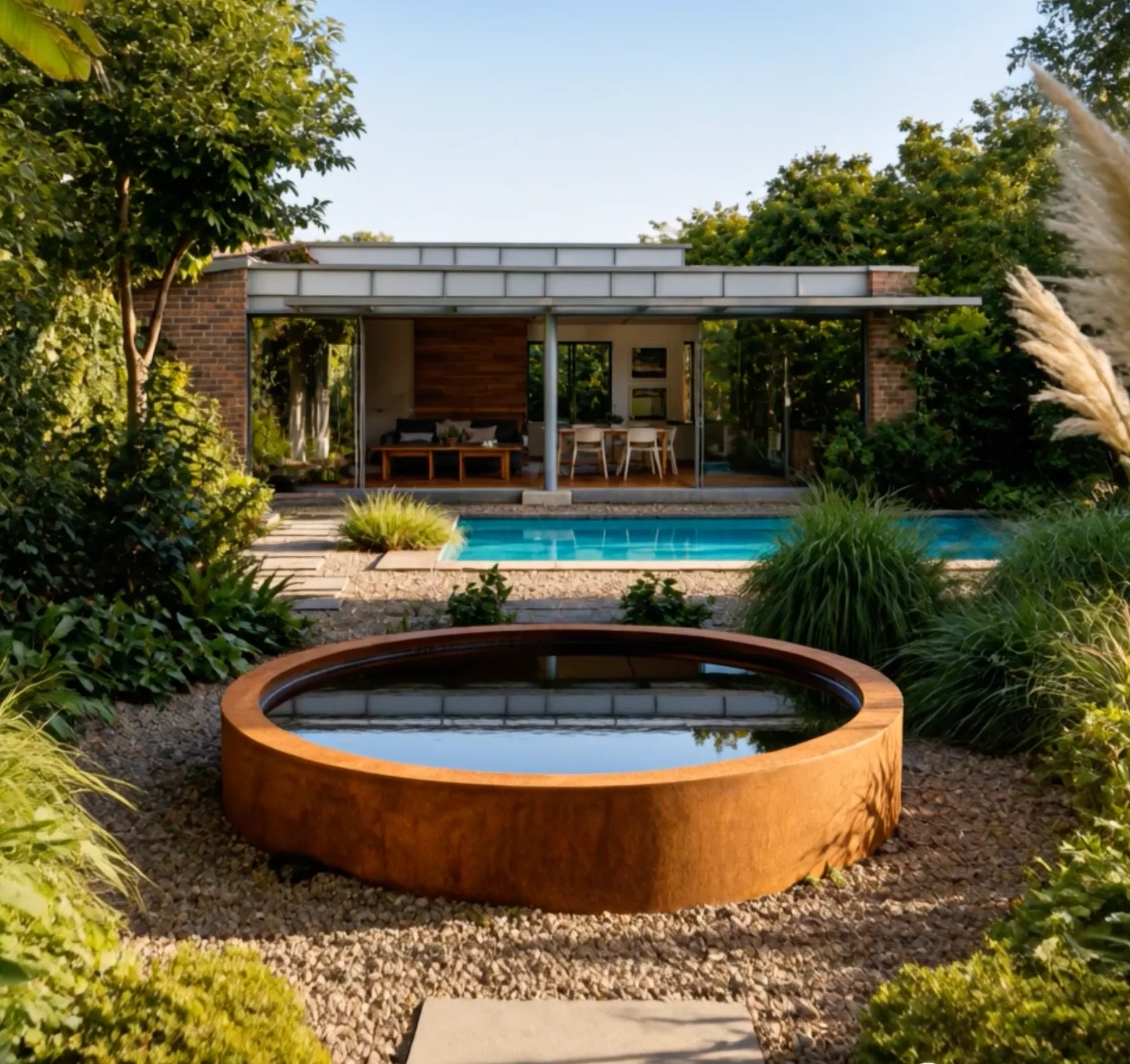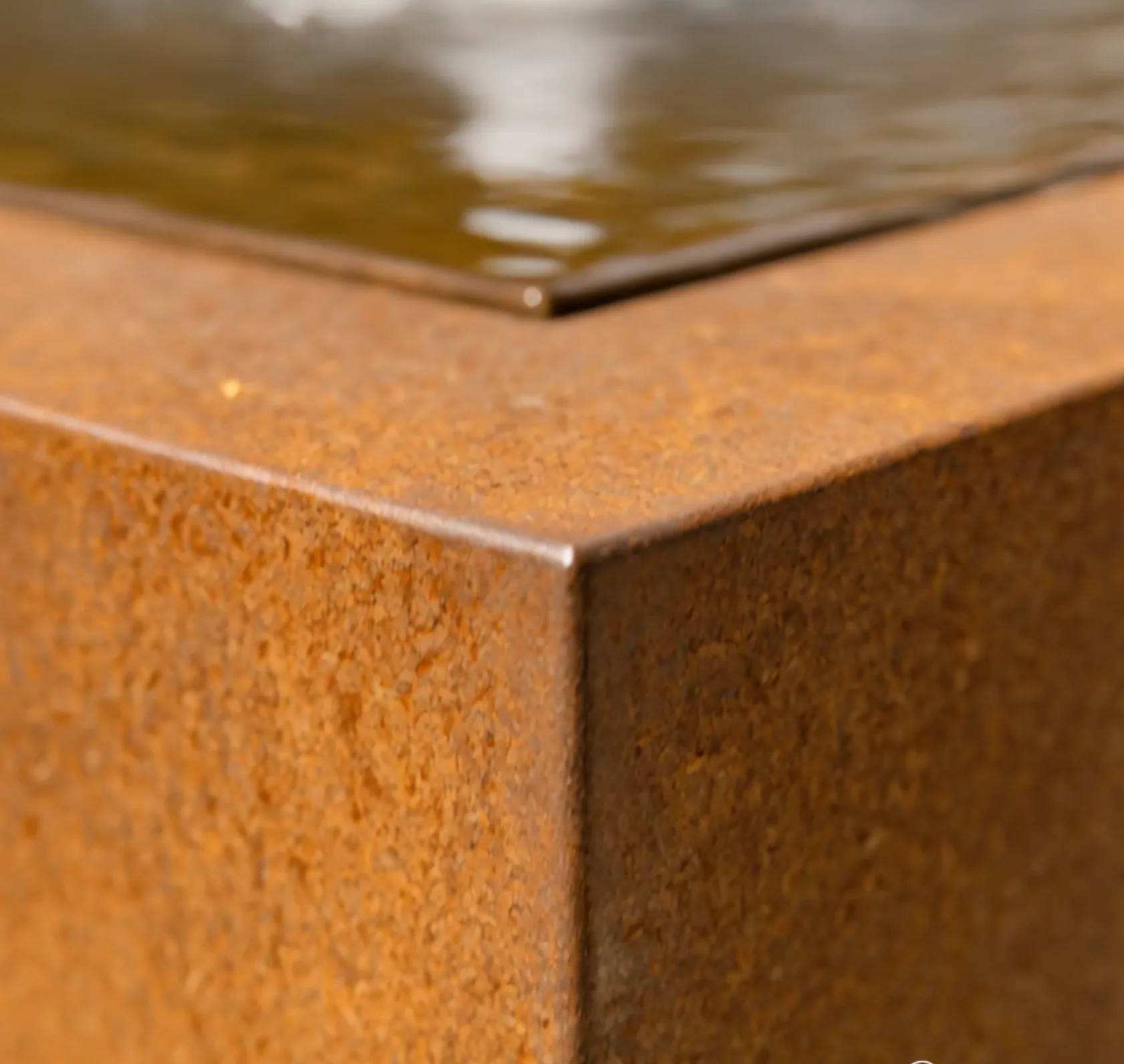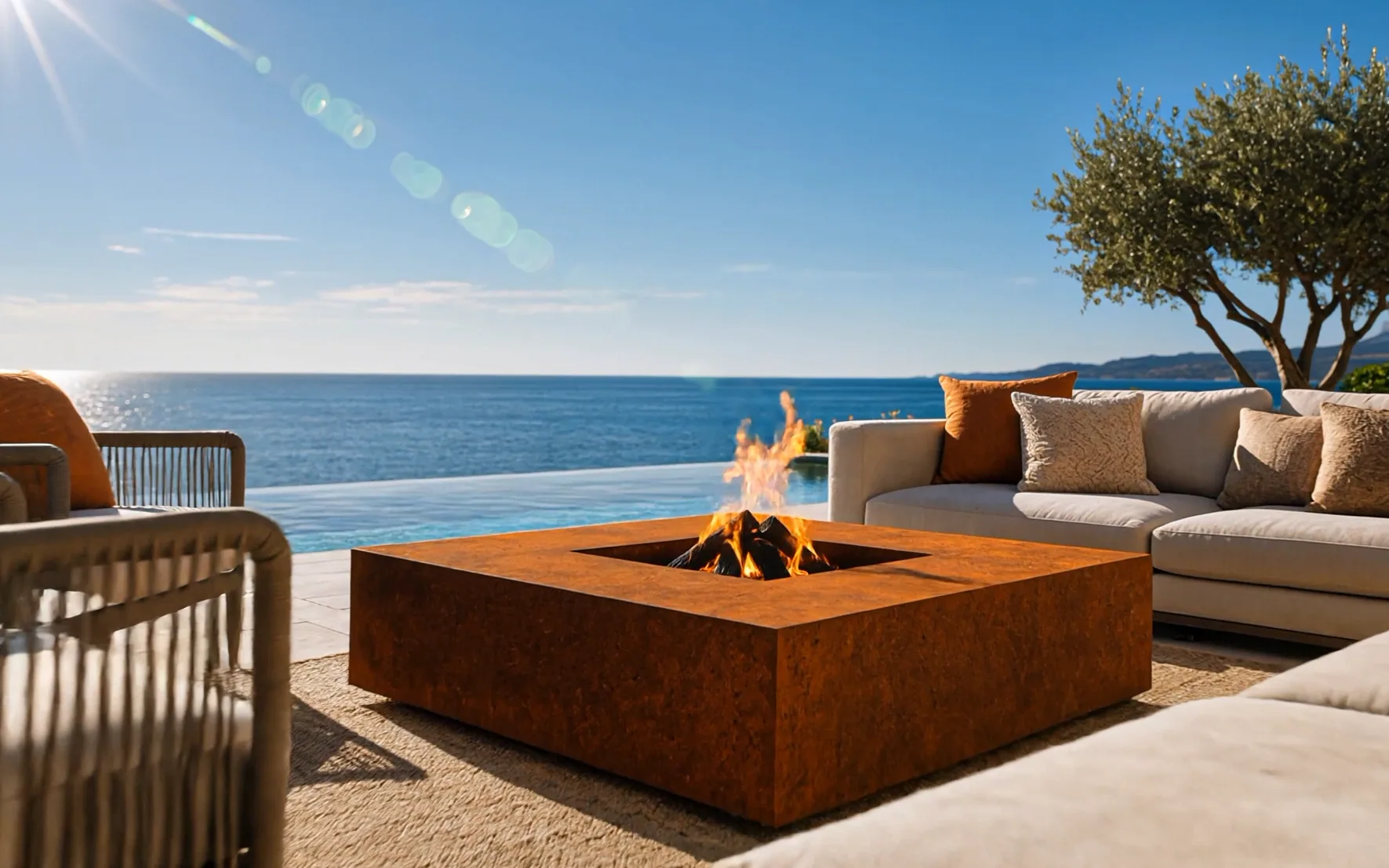
With or without a base: it all starts with the surface
The first question is not aesthetic but practical: where will the Corten steel planter stand? On a terrace, a balcony, a slab or a roof, you need a planter with a base, which holds the soil and can stand anywhere. In open ground, in a border, a lawn or along a path, a bottomless planter changes everything: it sits directly on the soil, and the roots grow freely downwards.
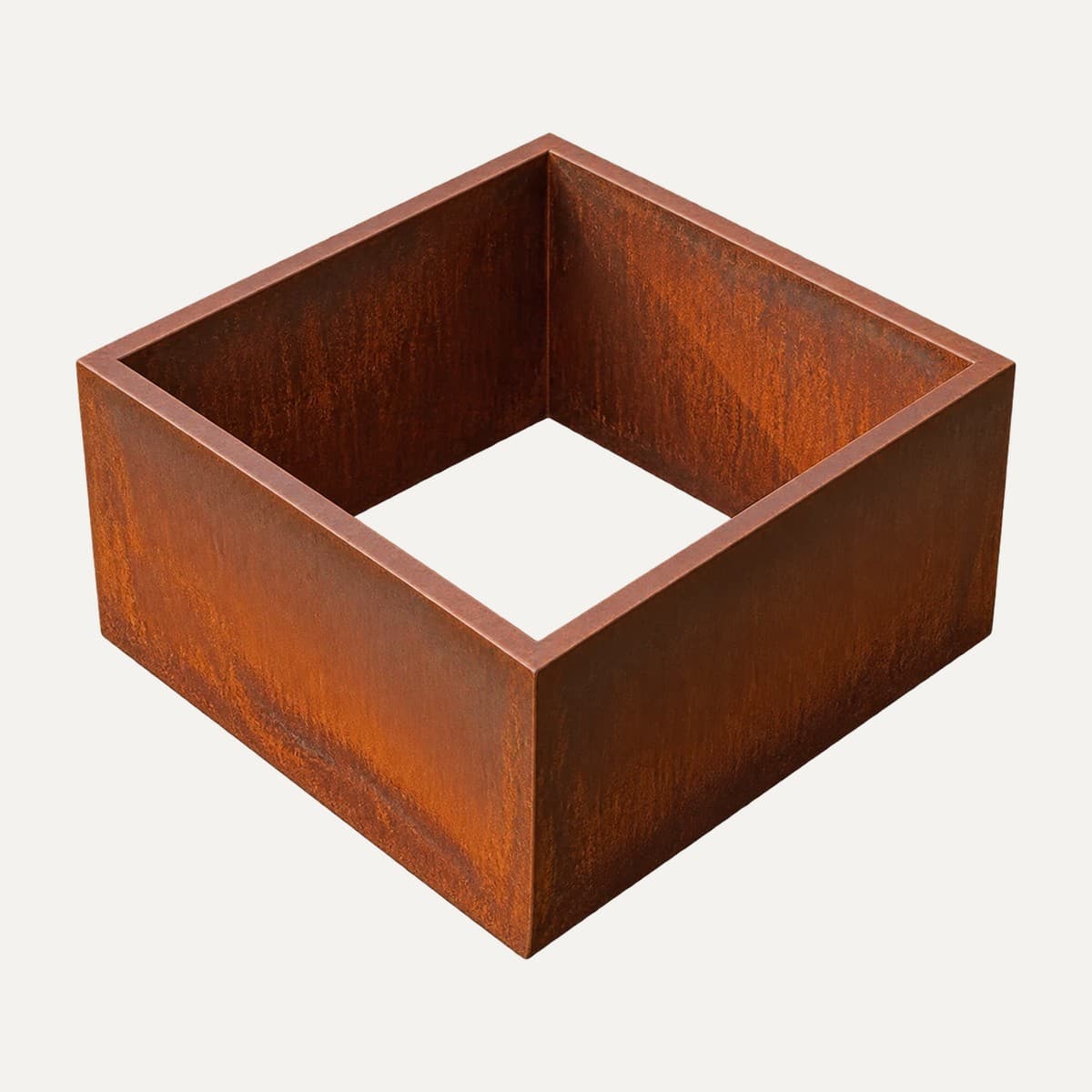
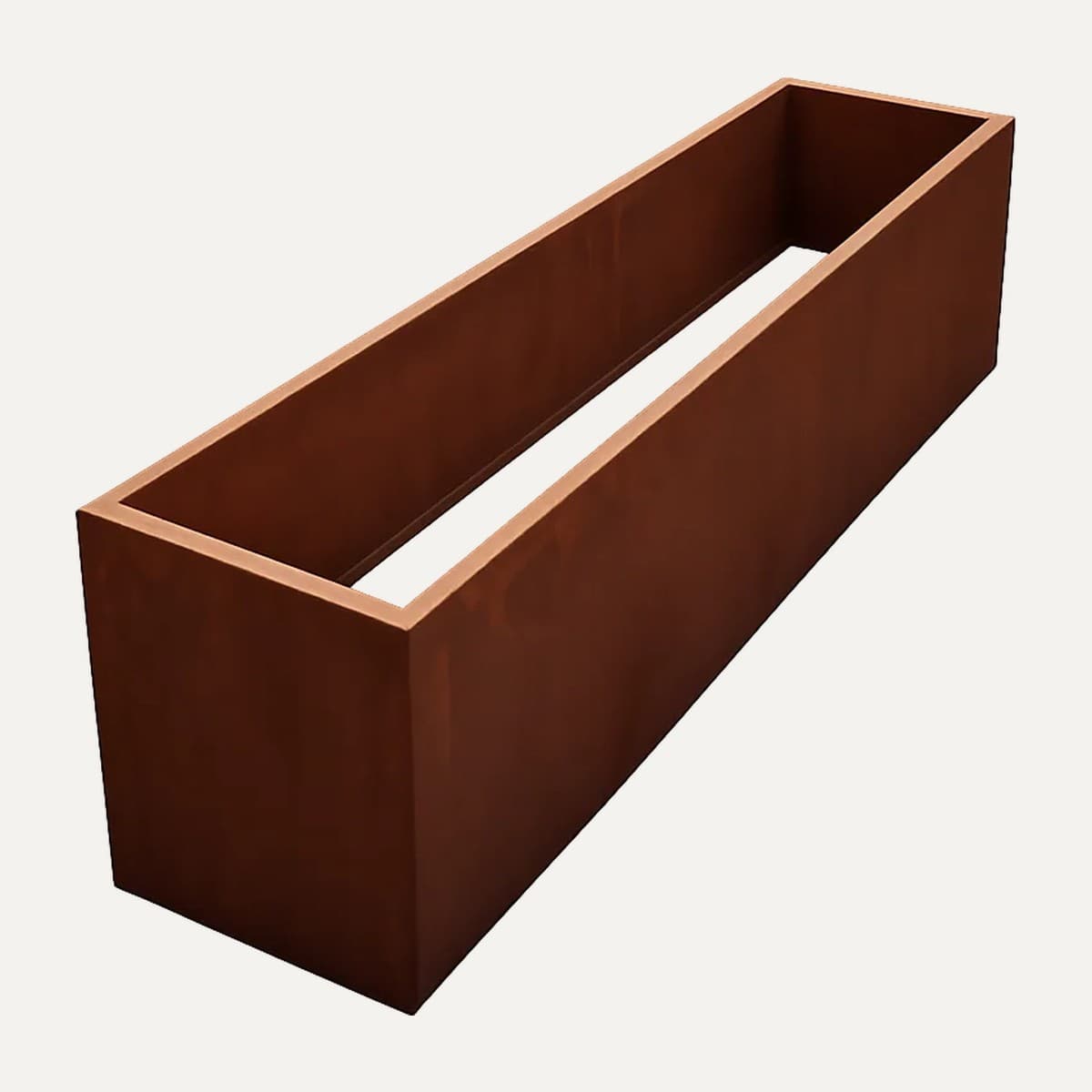
A bottomless Corten steel planter is often the most elegant answer for a tree or a hedge. The square Rhéa bottomless planter and the rectangular Gaïa bottomless planter draw a clean frame around the planting, raise it like a raised bed and protect it from the lawnmower, without ever restricting the growth of the roots. They also make a crisp edge between a border and a path.
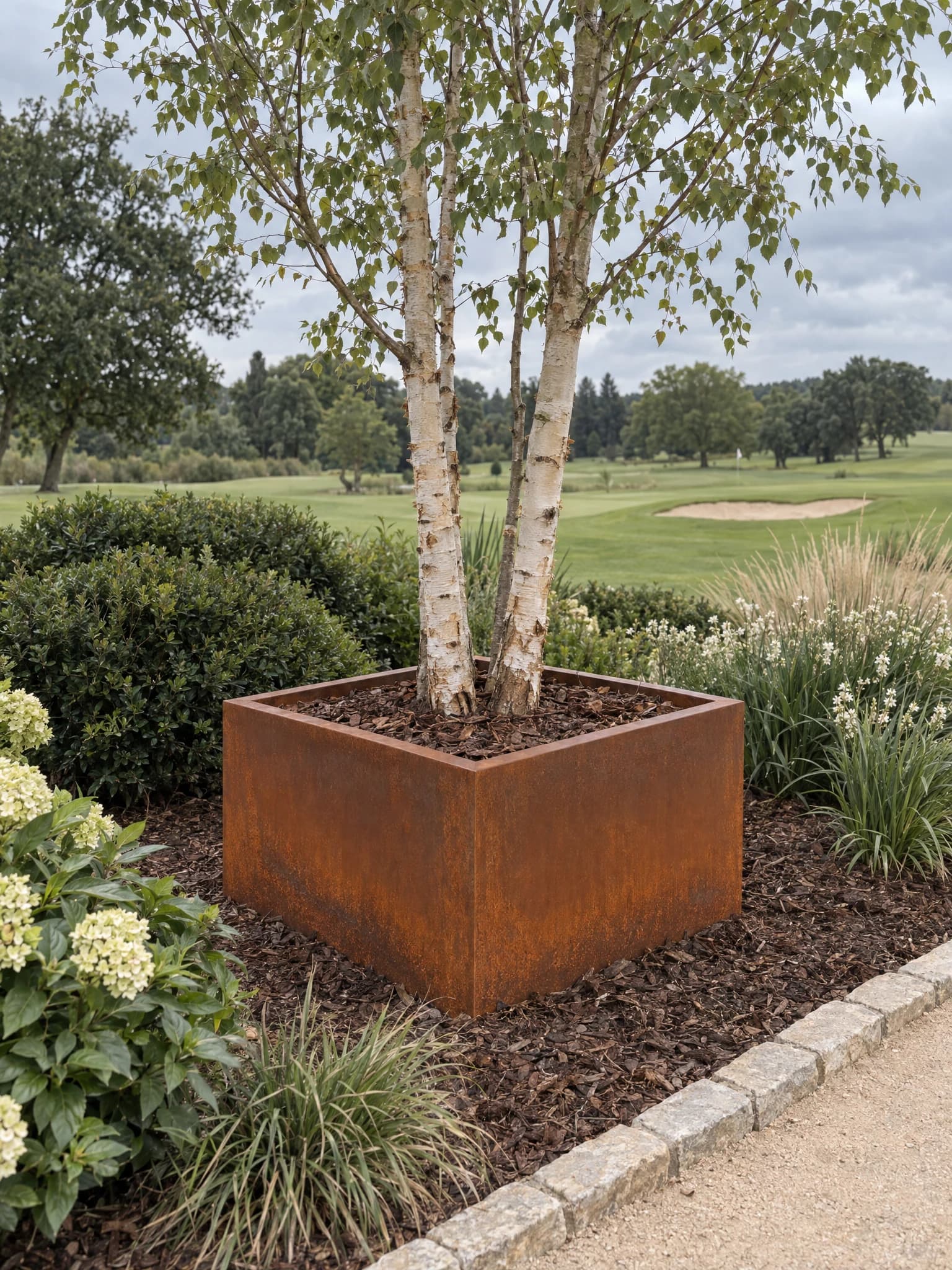
Rhéa bottomless planter
The Rhéa bottomless planter: a frame of Corten steel around a birch, its roots in open ground.
On a terrace, a planter with a base is then chosen according to the weight it will represent once filled and watered. On a balcony or a roof, have the permissible load checked by a professional before installing large volumes: it is the wet soil, far more than the steel, that weighs.
Which Corten planter shape for which use?
Each shape of Corten steel planter has its role in the composition. Think of it as an architect thinks of a volume: what it marks, what it separates, what it accompanies.
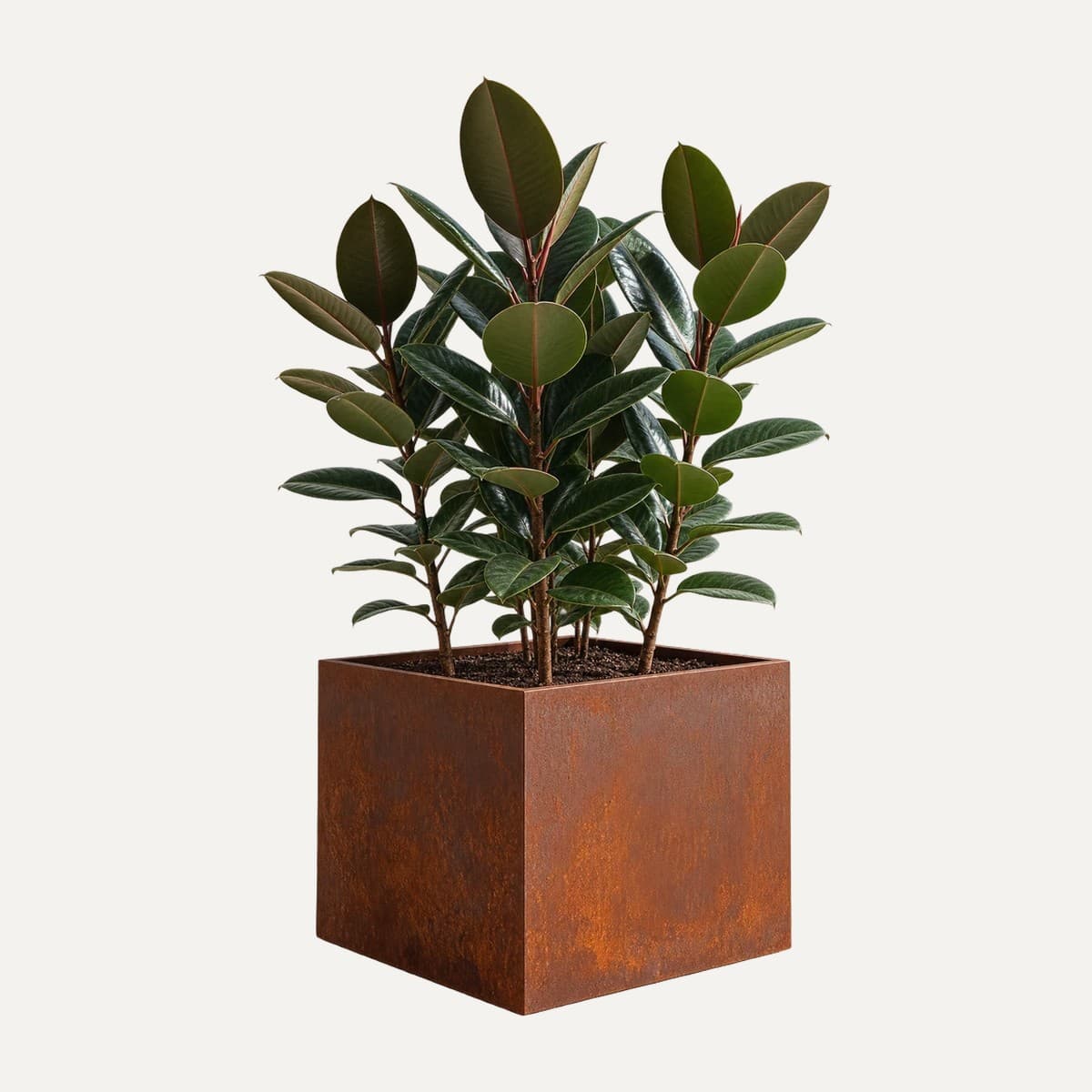
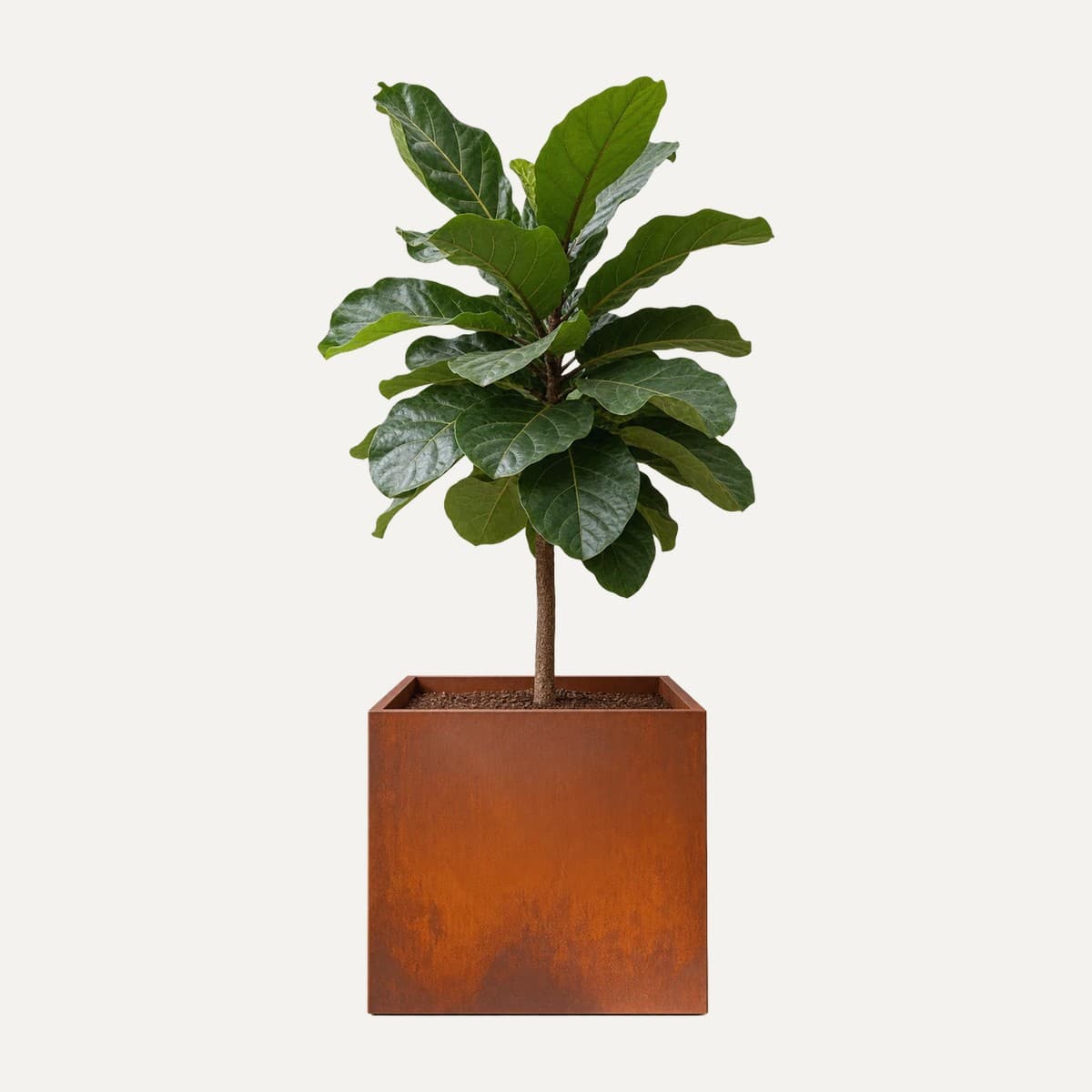
- The cube marks a threshold, frames a door, holds a tree in a container. The Cybèle square planter is a deep cube of Corten steel, also available in a 2 mm version.
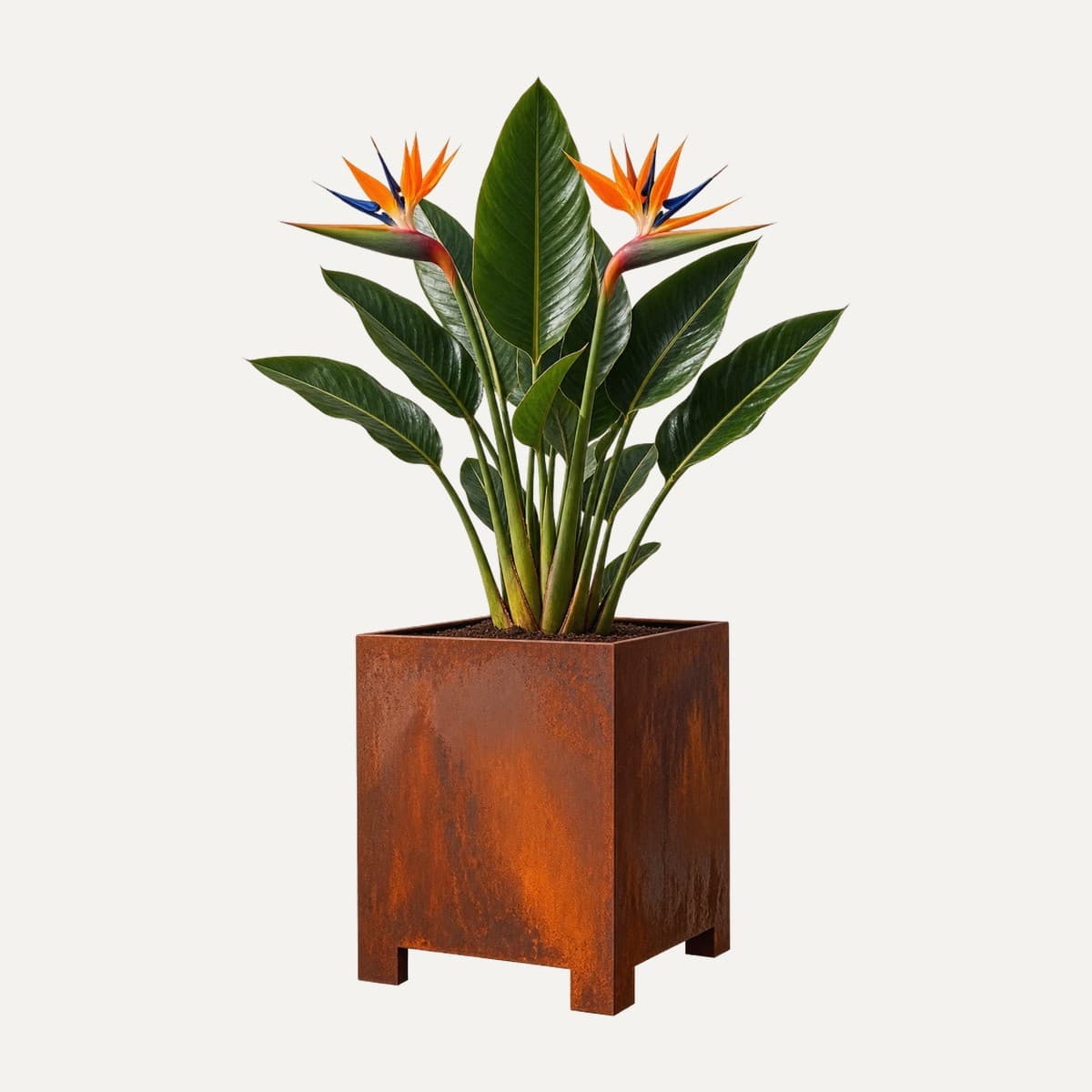
- The planter on legs lightens the silhouette and lifts the base off the ground: the Thalie planter on legs rests on four integrated legs.
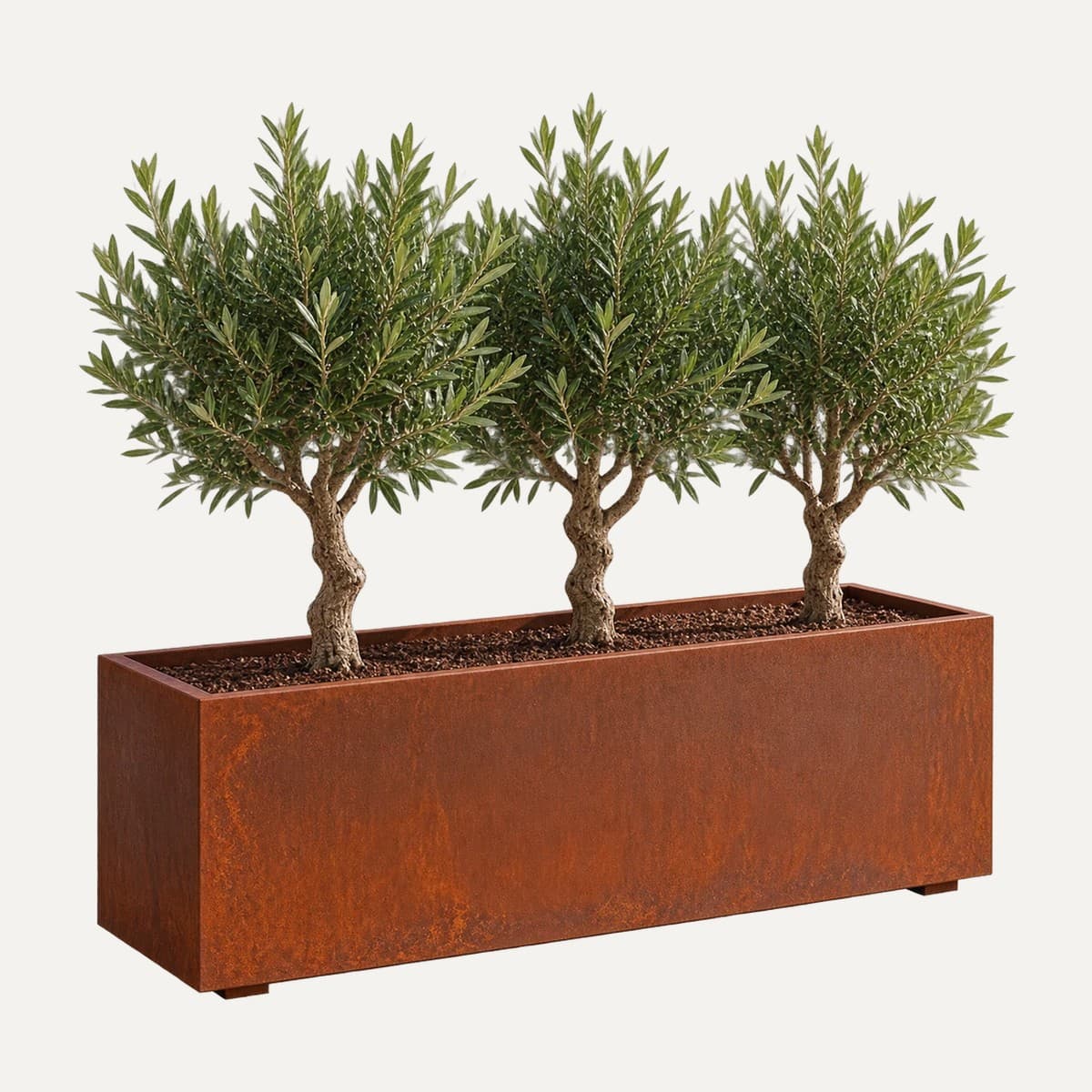
- The line structures: the Déméter rectangular planter runs along a terrace, edges a pool or separates two spaces with a low hedge.
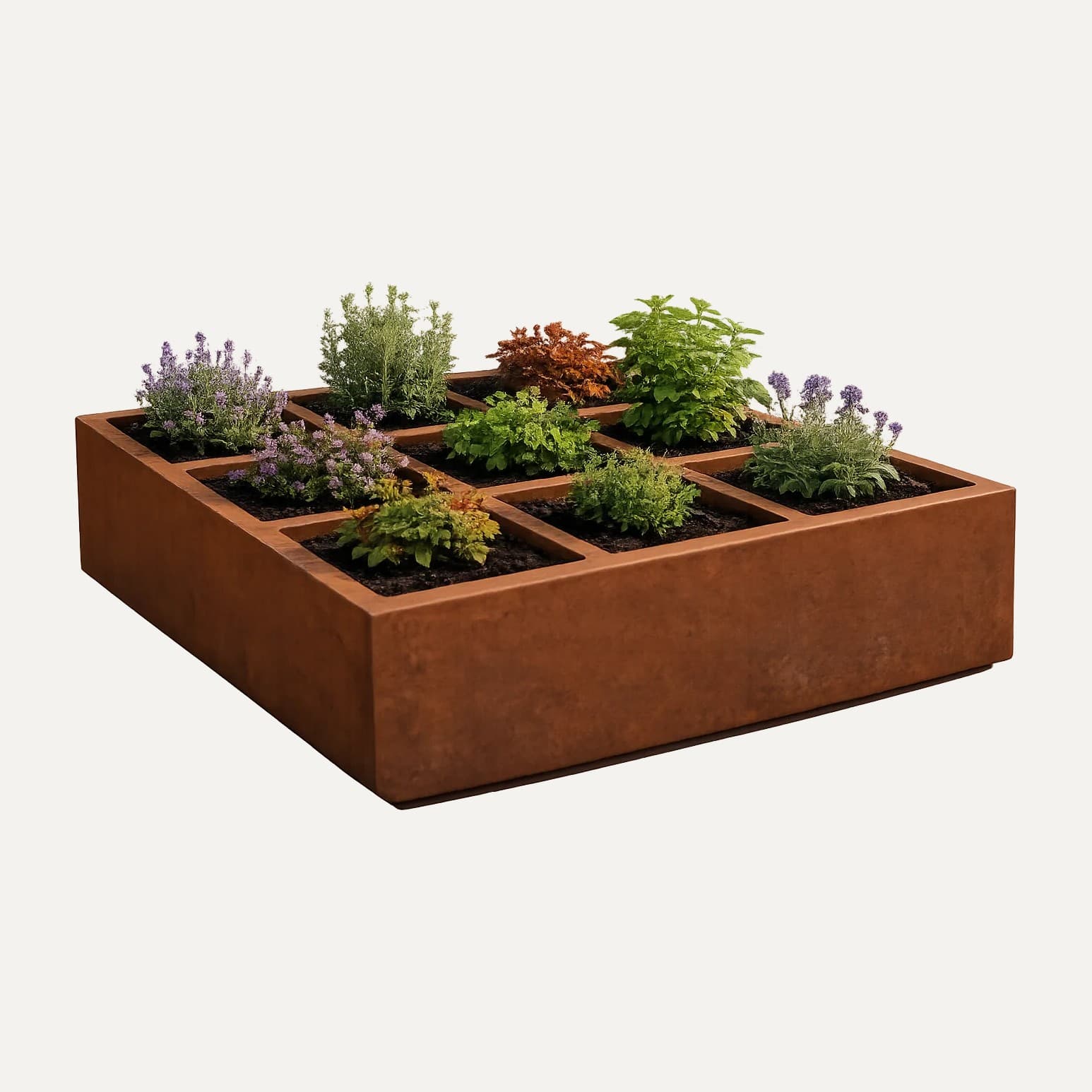
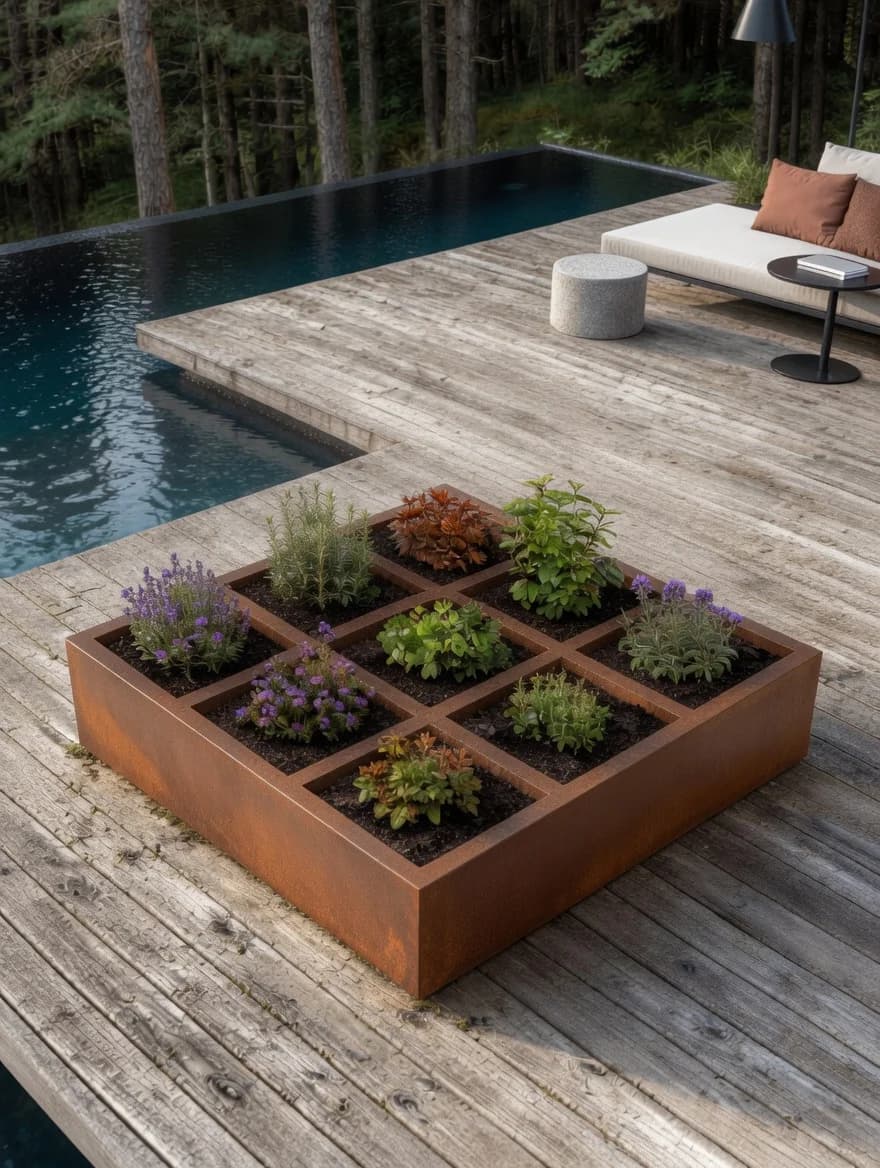
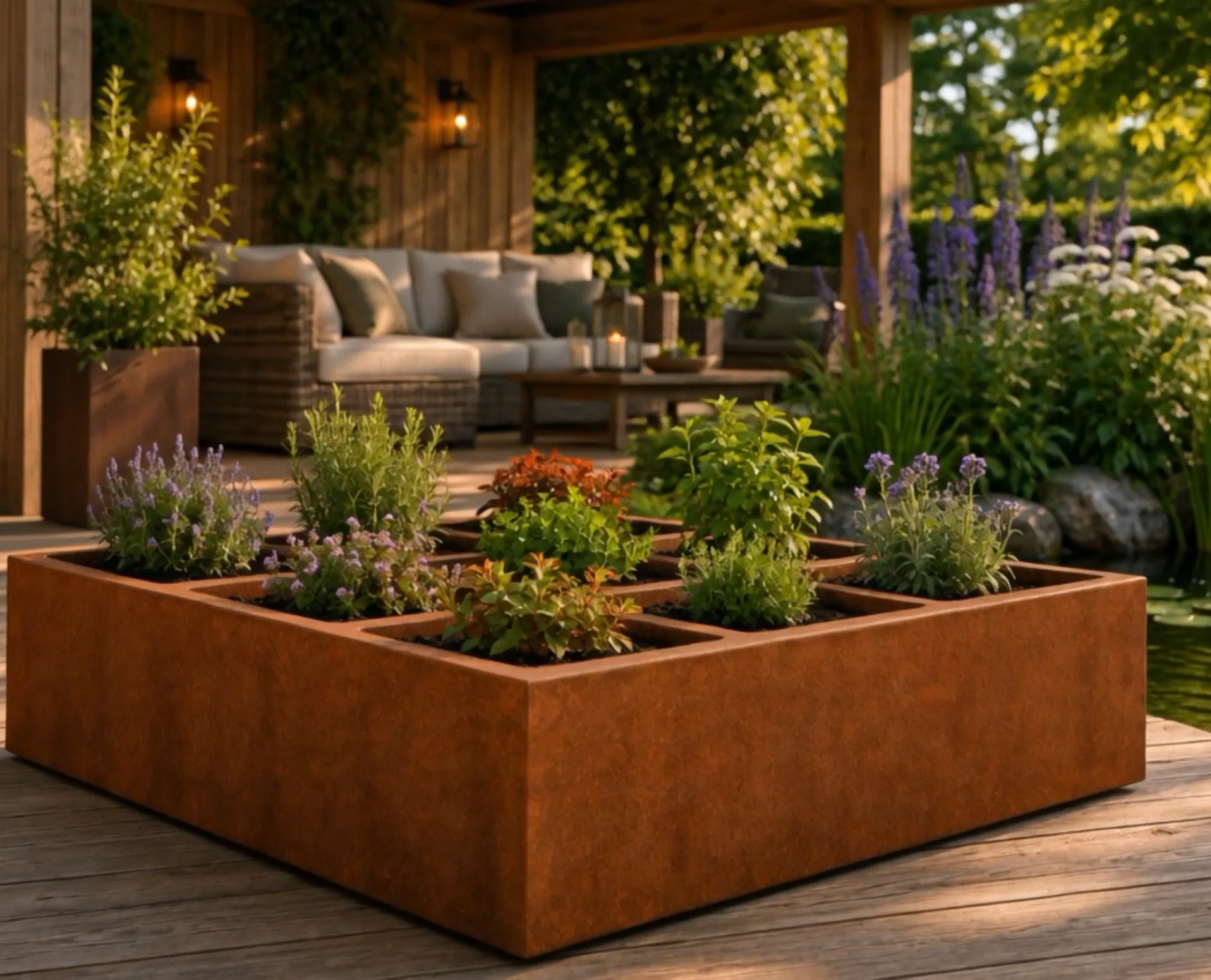
- The multi planter composes: the Maïa multi planter divides a single volume into compartments, for a herb garden or a play of textures.
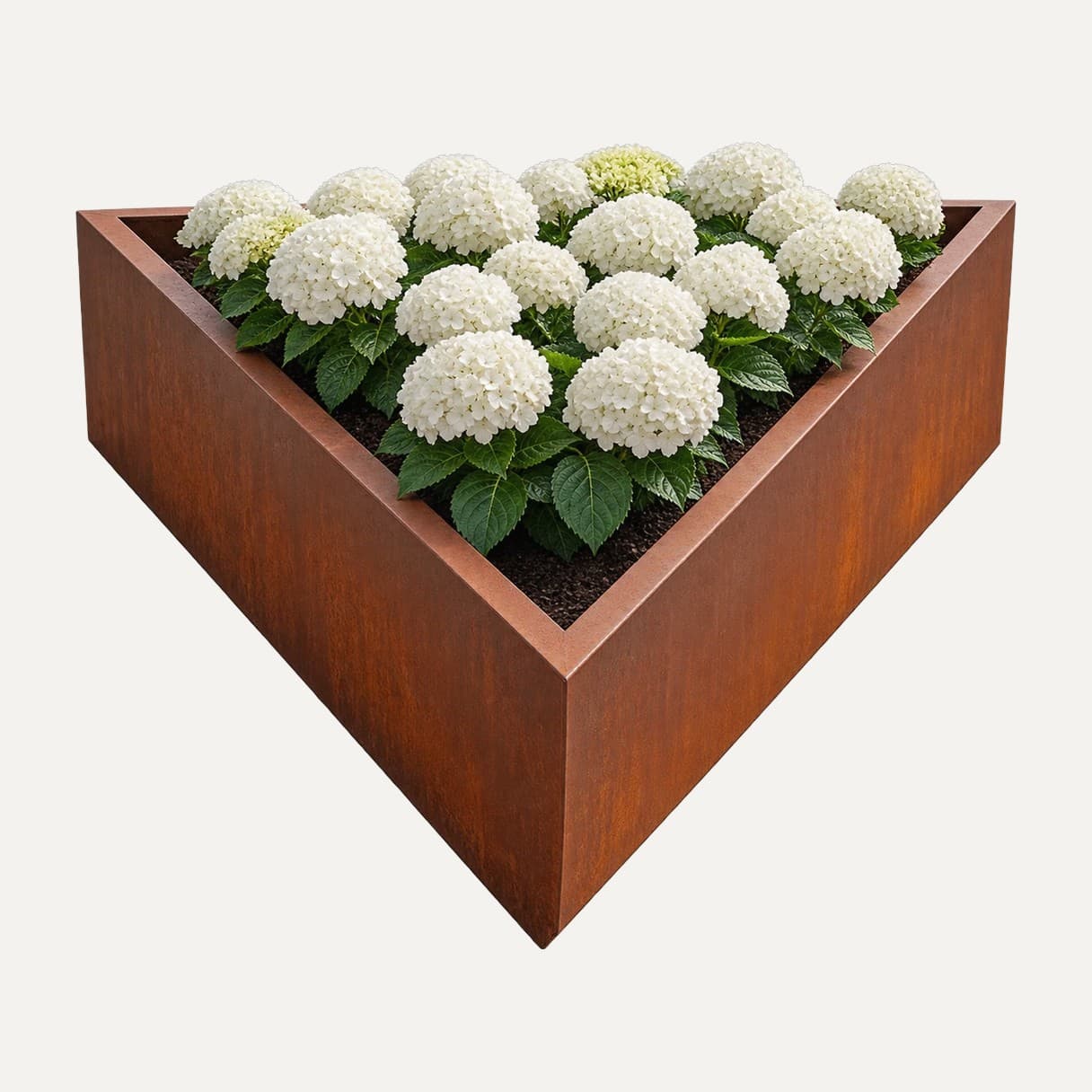
- The triangle inhabits corners: the Iris triangular planter slips between two walls or into the point of a terrace.
- The pot punctuates: the Calypso conical pot, the Daphné flared pot or the Callisto round pot give rhythm to a path, an entrance or a row of shrubs.
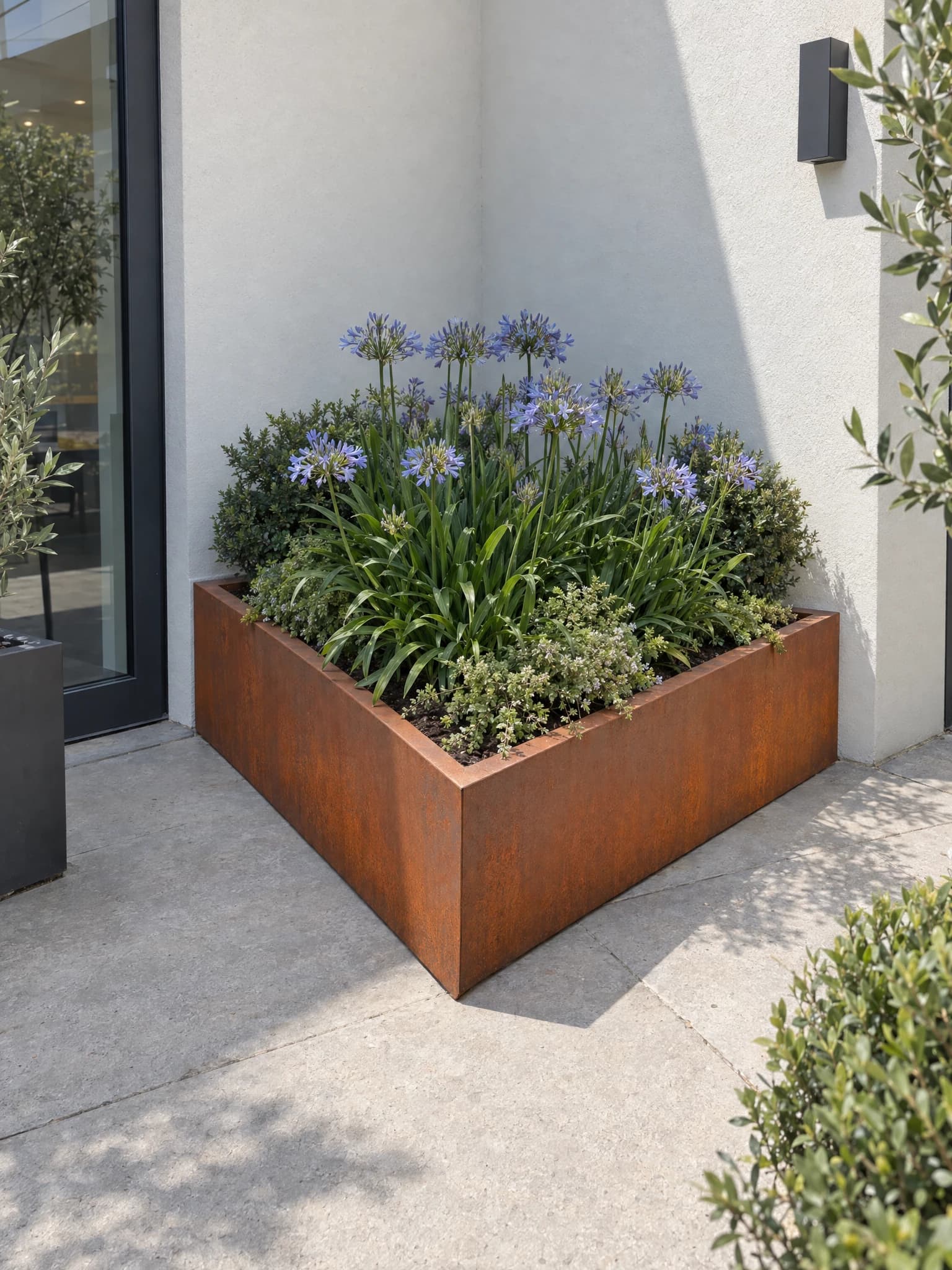
Iris triangular planter
The Iris triangular planter, planted with agapanthus: a form designed for corners and the points of terraces.
Repetition is often stronger than a single piece. Three cubes in a row, a line of round pots along a wall, two Déméter planters answering each other: Corten steel gains presence when the design repeats, and its patina unifies the whole.
Sheet thickness: 1.5 mm or 2 mm?
Thickness is the criterion people look at least and the one that matters most. A Corten steel planter is under constant strain: damp soil pushes against the sides, and the seasons expand and contract the metal. The thicker the sheet, the flatter the faces and the tauter the edges remain, especially on large formats.
At Cortenys, thickness is chosen model by model and always shown on the product page. Cybèle and Déméter come in 1.5 mm and 2 mm; Thalie, Rhéa, Calypso and Daphné are crafted in 2 mm; Iris in 1.5 mm. A 1.5 mm sheet suits standard volumes; 2 mm gives a fuller presence and extra rigidity to large formats. Be wary of planters whose thickness is not stated: it is often the first place where corners are cut.
Drainage, soil and plants: planting for success
A Corten steel planter needs no treatment, but the plants, for their part, need healthy soil. Three rules are enough.
- Drain. Water must never stagnate at the bottom of a planter with a base. A drainage layer of clay pebbles or gravel, covered with a geotextile membrane that holds back the soil, keeps the roots from suffocating and protects the metal from constant moisture. Make sure excess water can escape.
- Insulate. In full sun, the metal heats up. For sensitive plants, line the inner sides with insulation or a thick geotextile: the roots stay cool, and the soil does not sit directly against the steel.
- Raise. A planter set flat on a slab traps water beneath it. Discreet spacers, or a model on legs such as Thalie, let the air circulate and the base dry.
As for plants, Corten steel goes with almost everything, but certain pairings flatter it. Ornamental grasses, lavender, olive trees, white hydrangeas and silver foliage make the patina sing; herbs find an elegant kitchen garden in the Maïa multi planter; a Japanese maple or a birch gives the Cybèle cube the presence of a sculpture. Always match the volume of soil to the mature size of the plant.
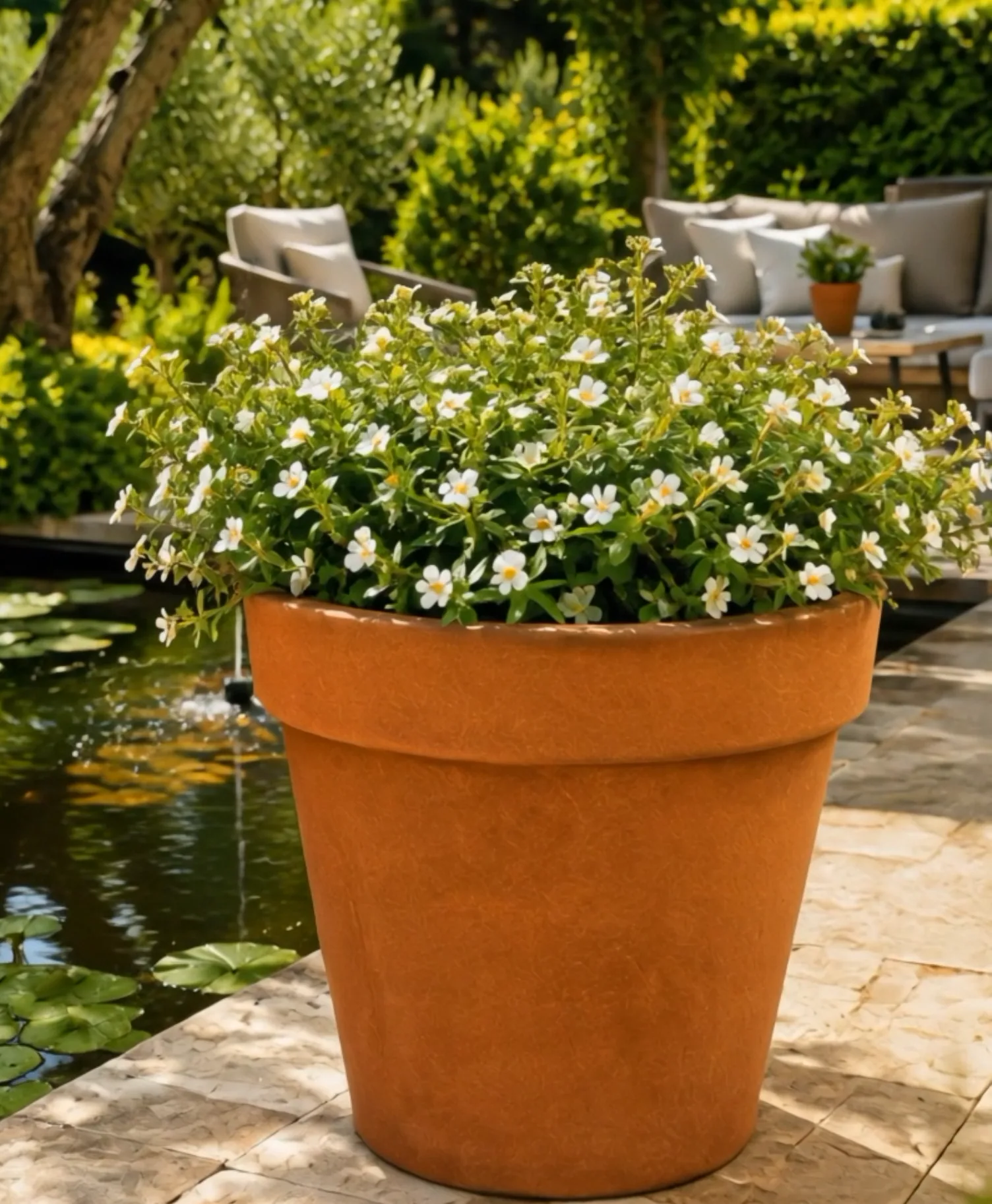
Calypso conical pot
The Calypso conical pot: a familiar silhouette, carried by a deep patina and a 2 mm sheet.
The patina and pale surfaces
A raw Corten steel planter, without varnish, goes on living: its patina deepens over the seasons. In the first months, rain running over the metal can carry away oxide particles and mark pale stone or porous concrete. Cortenys pieces leave the workshop already dressed in their signature patina, which considerably reduces the effect.
For a pale terrace, a poolside or precious stone, there are two solutions: stand the planter on a bed of gravel, a dark slab or spacers, or choose the protective varnish, which fixes the patina and keeps run-off at bay. All the details are in our guide Corten steel care.
A Corten steel planter indoors
A Corten steel planter brings the warmth of its patina to a hallway, a living room or a conservatory. On one condition, which at Cortenys is not open to discussion: the protective varnish is mandatory indoors. Applied by hand in the workshop, it fixes the patina and protects floors and walls from any transfer. Place a saucer or a drip tray beneath the plant, so that water from watering never reaches the floor.
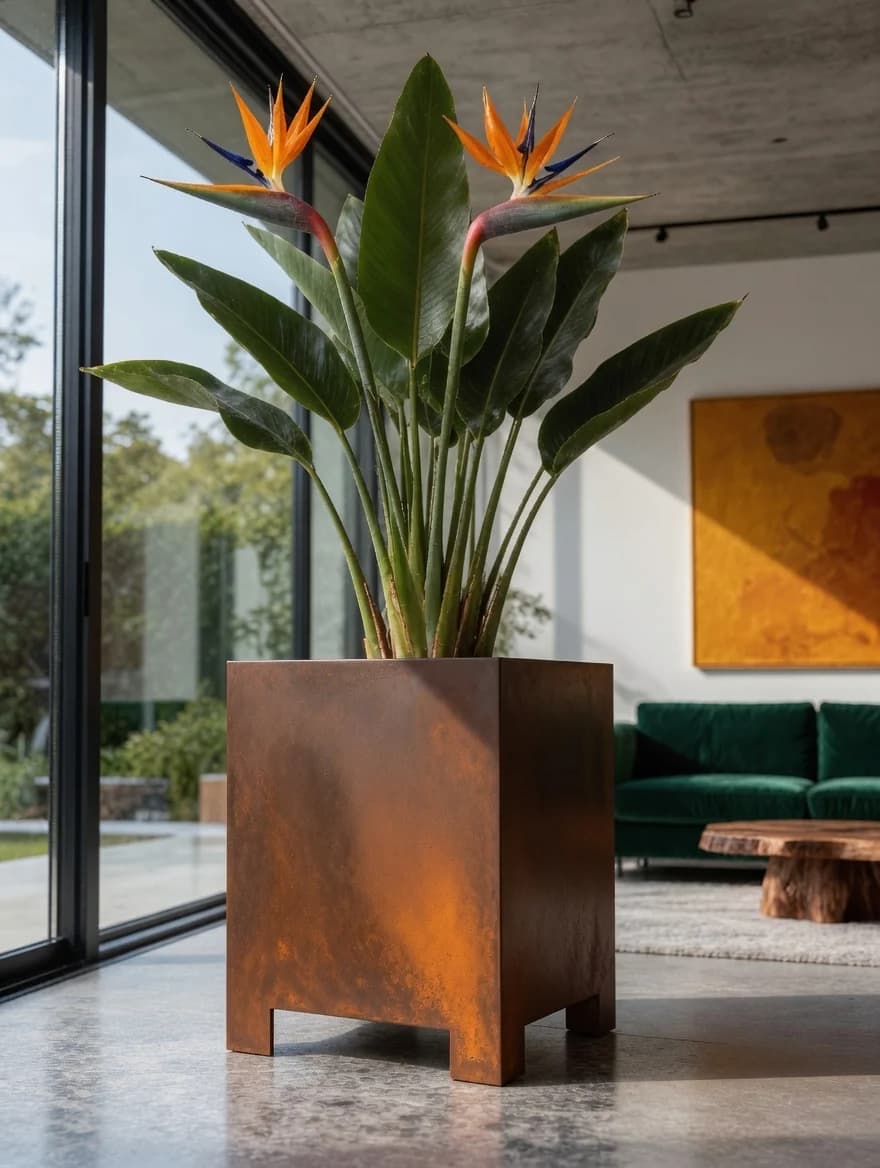
Thalie planter on legs
The Thalie planter on legs indoors: varnished in the workshop, it brings the Corten patina into the heart of the home.
How to recognise a high-end Corten planter
From a distance, all Corten steel planters look alike. Up close, everything sets them apart. A few points to check before you buy:
- The stated thickness, consistent with the size of the planter.
- The edges and welds: clean and regular, with no burrs and no distortion of the faces.
- The patina: a sheet delivered grey or mottled will take months to even out; an applied, inspected patina is even from the day of delivery.
- The proportions: a planter is first and foremost a volume, which must hold its own without any planting, in the depths of winter.
- The guarantee and the service: someone who answers, advises and follows the piece over time.
Every Corten steel planter from the House is designed in France, crafted in Europe to order and inspected before it leaves, with no logo and no plate: the piece is recognised by its lines and its patina. Allow 2 to 5 weeks for a collection piece, and 3 to 10 weeks for a bespoke planter made to your dimensions. All are guaranteed for two years. For a coastal project, read our guide Corten steel near the sea first.