Choosing your Corten steel fountain
Before installing a Corten steel fountain, decide what kind of water you want to hear. All our fountains fall into three families, which call for neither the same space nor the same installation.
Jet fountains: a murmur at the heart of the garden
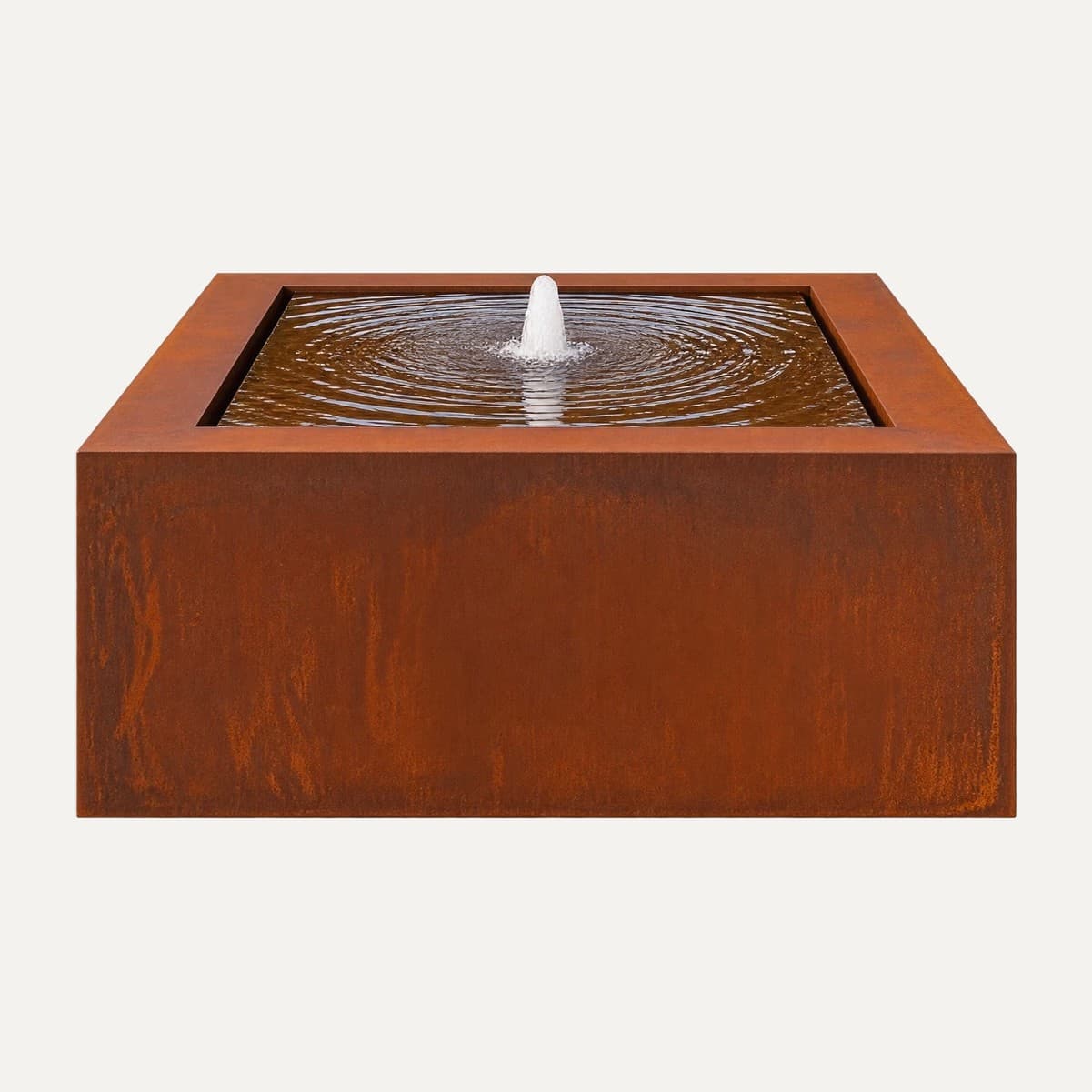
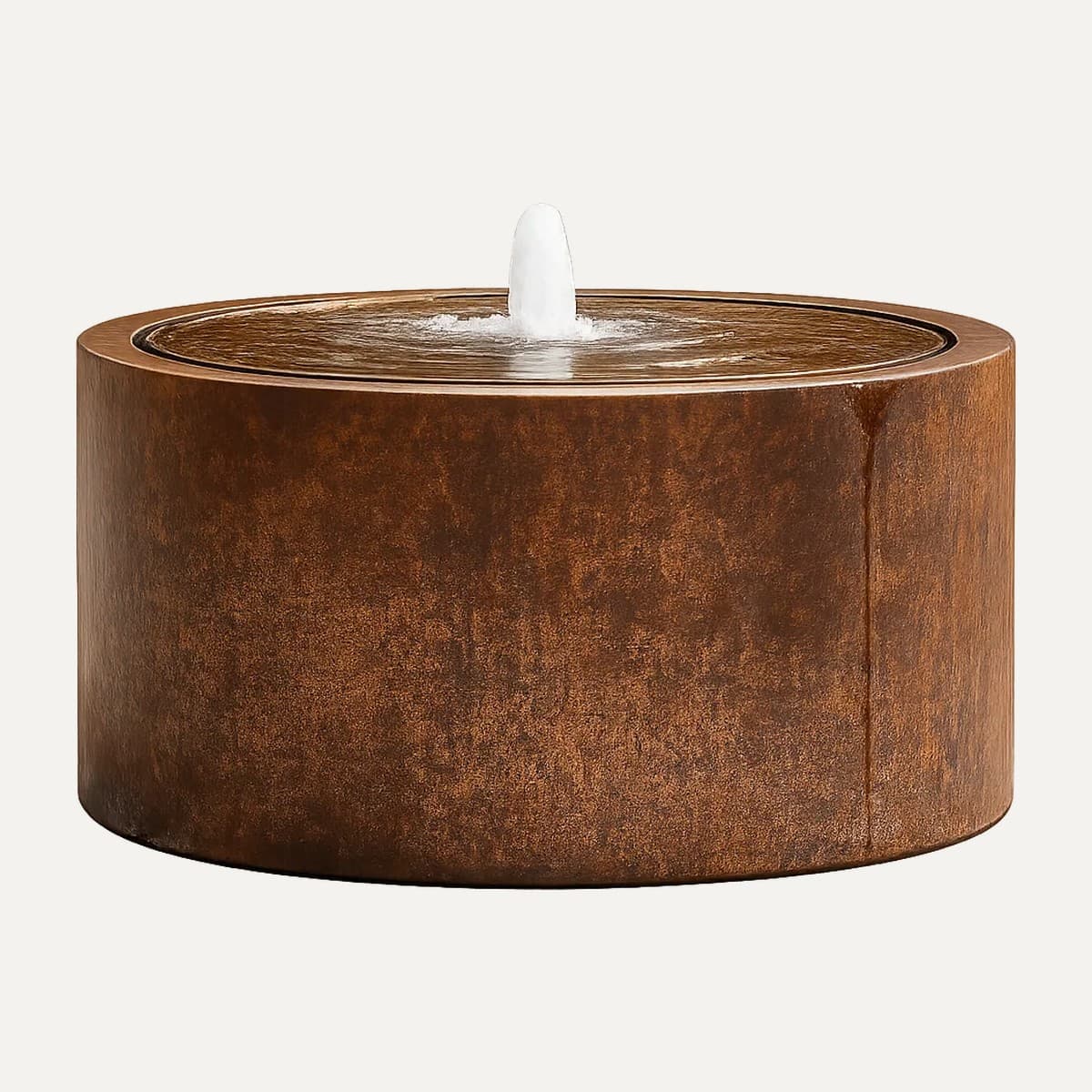
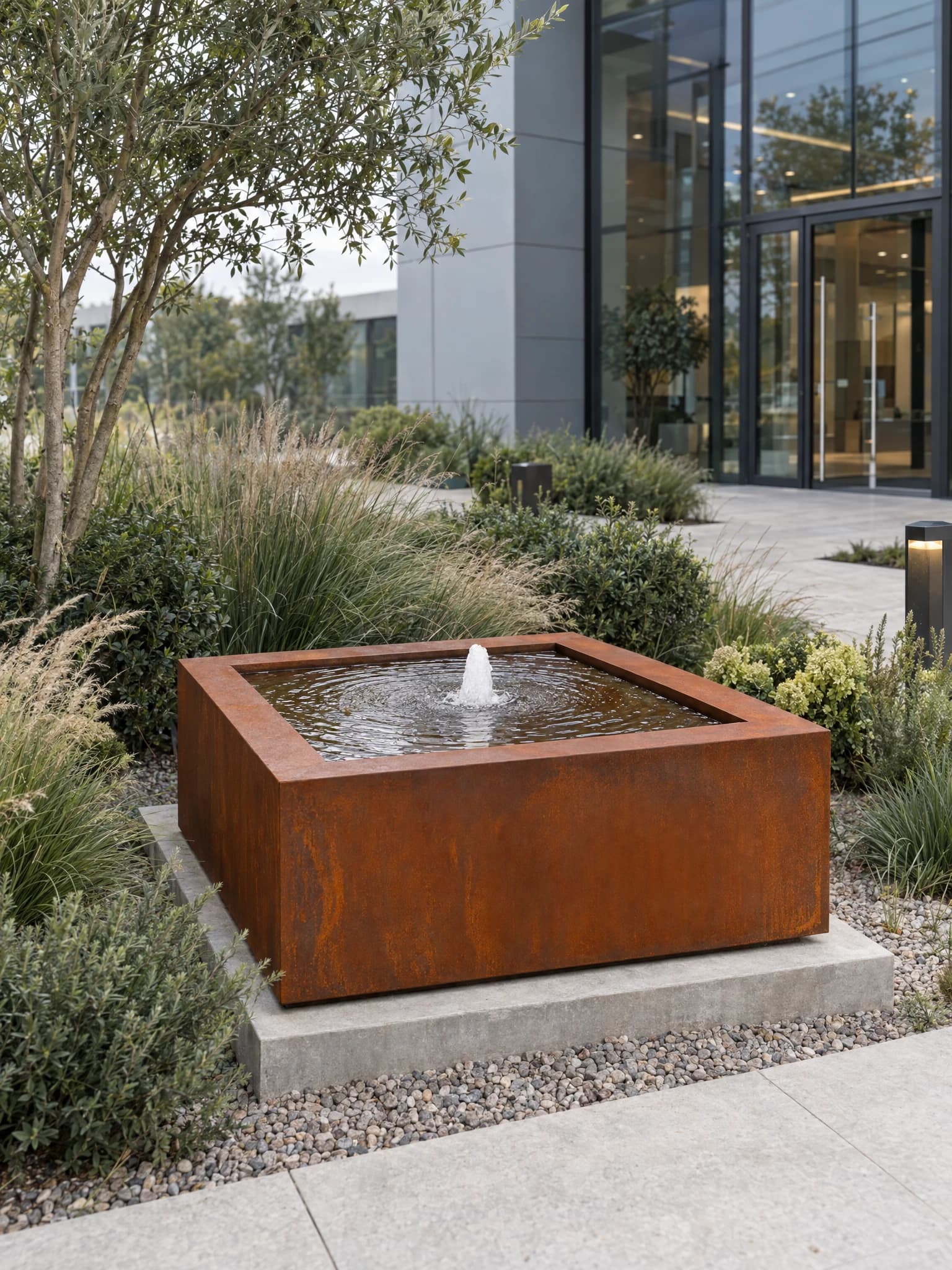
The Alban square fountain, a cube of Corten steel, and the Elio round fountain, a cylinder with a bubbling jet, send water up from the centre of a calm pool. Pump and LEDs are built in: the fountain lights up in the evening. Set in the middle of a courtyard, a patio or a gravel bed, they can be admired from every side.
Alban square fountain
The Alban square fountain, on a level slab: a cube of Corten steel, a central jet, pump and LEDs built in.
Cascades and water walls: the sound of falling water
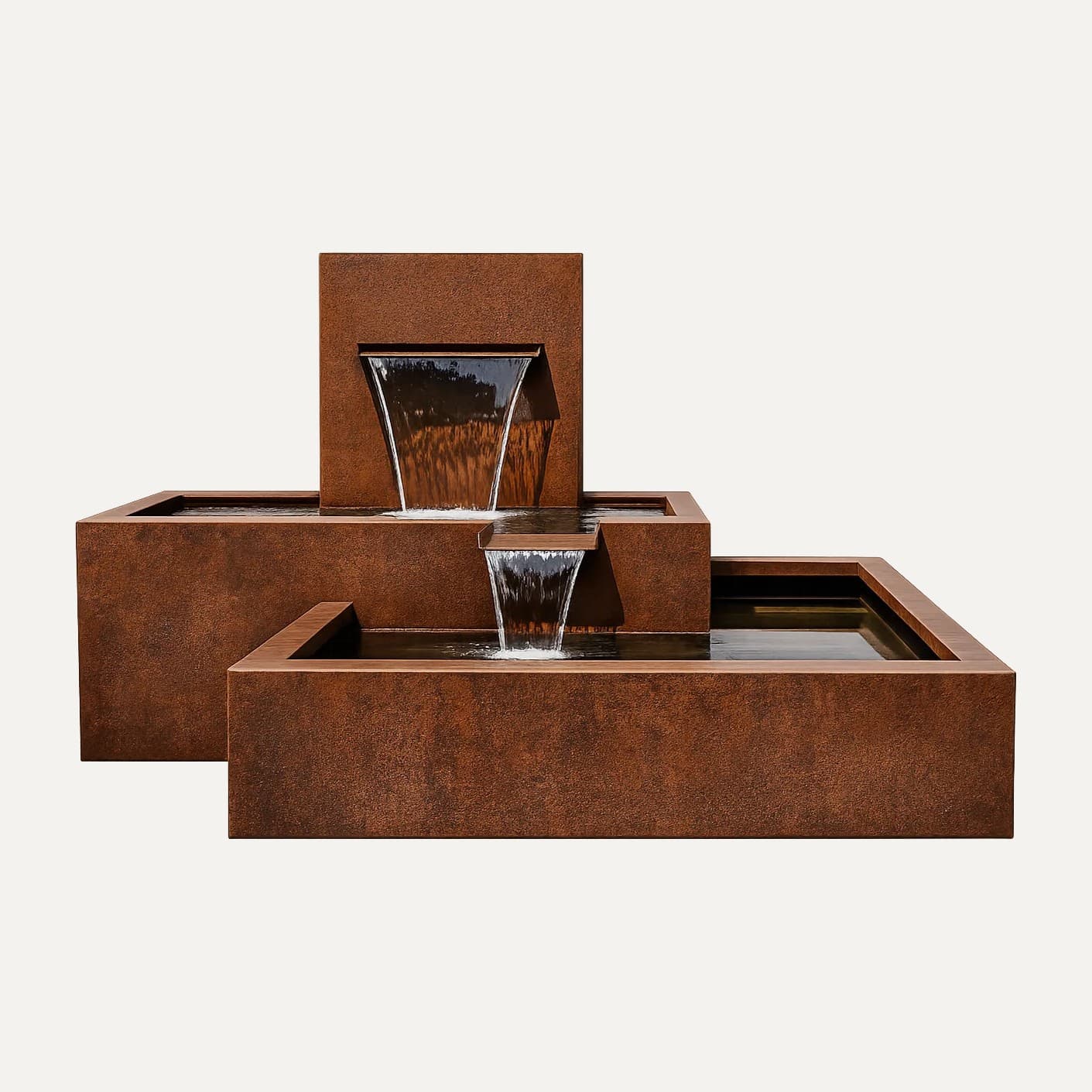
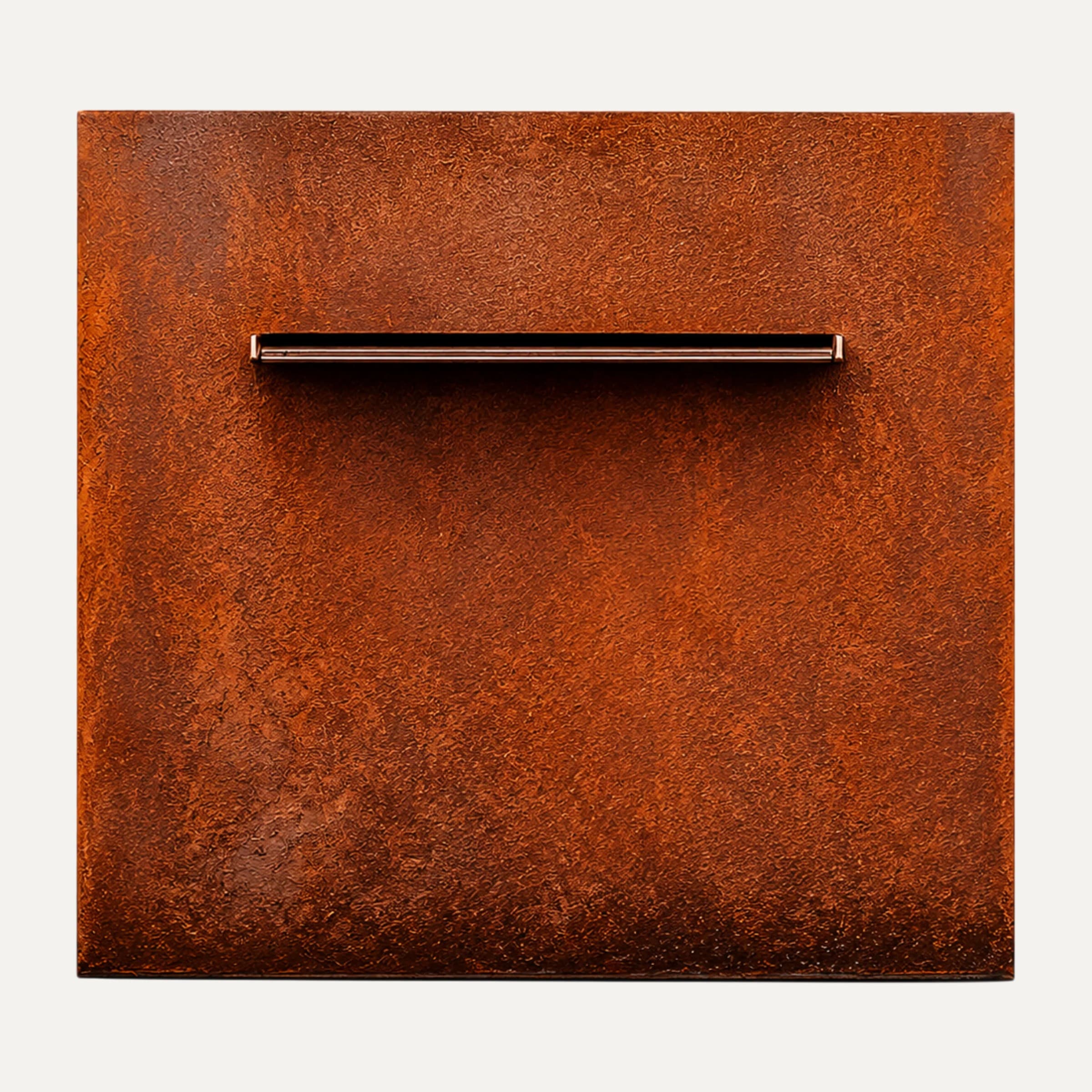
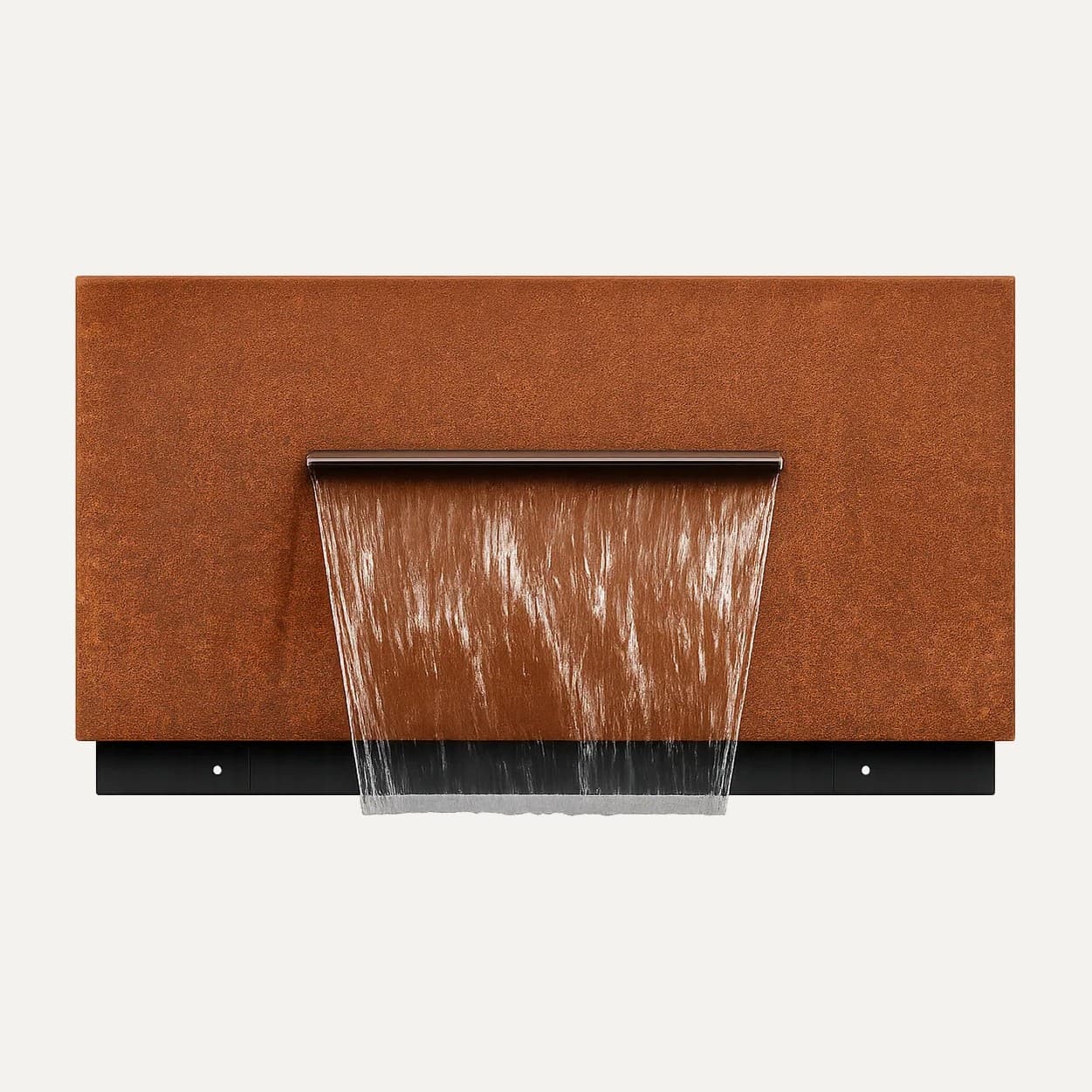
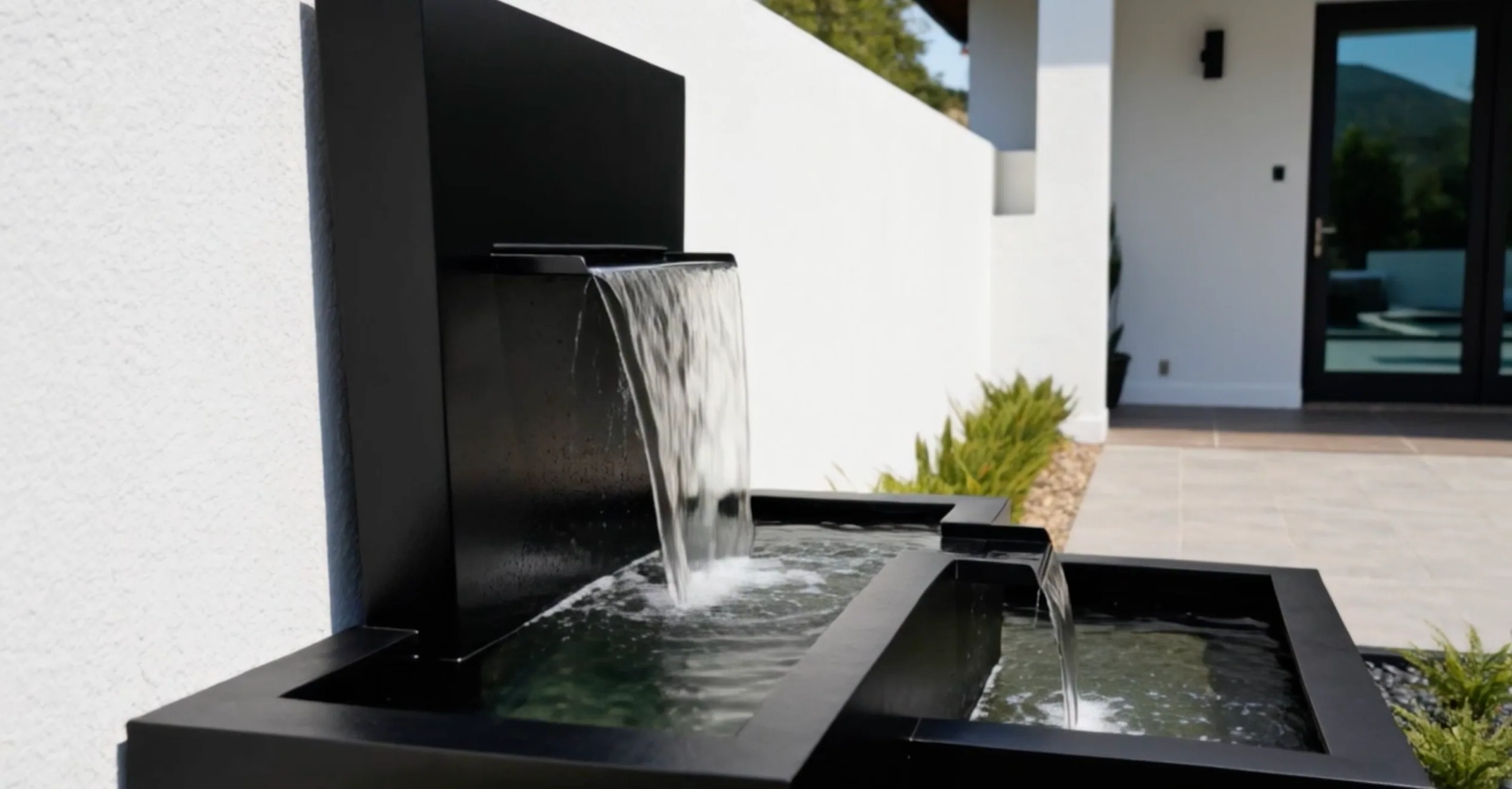
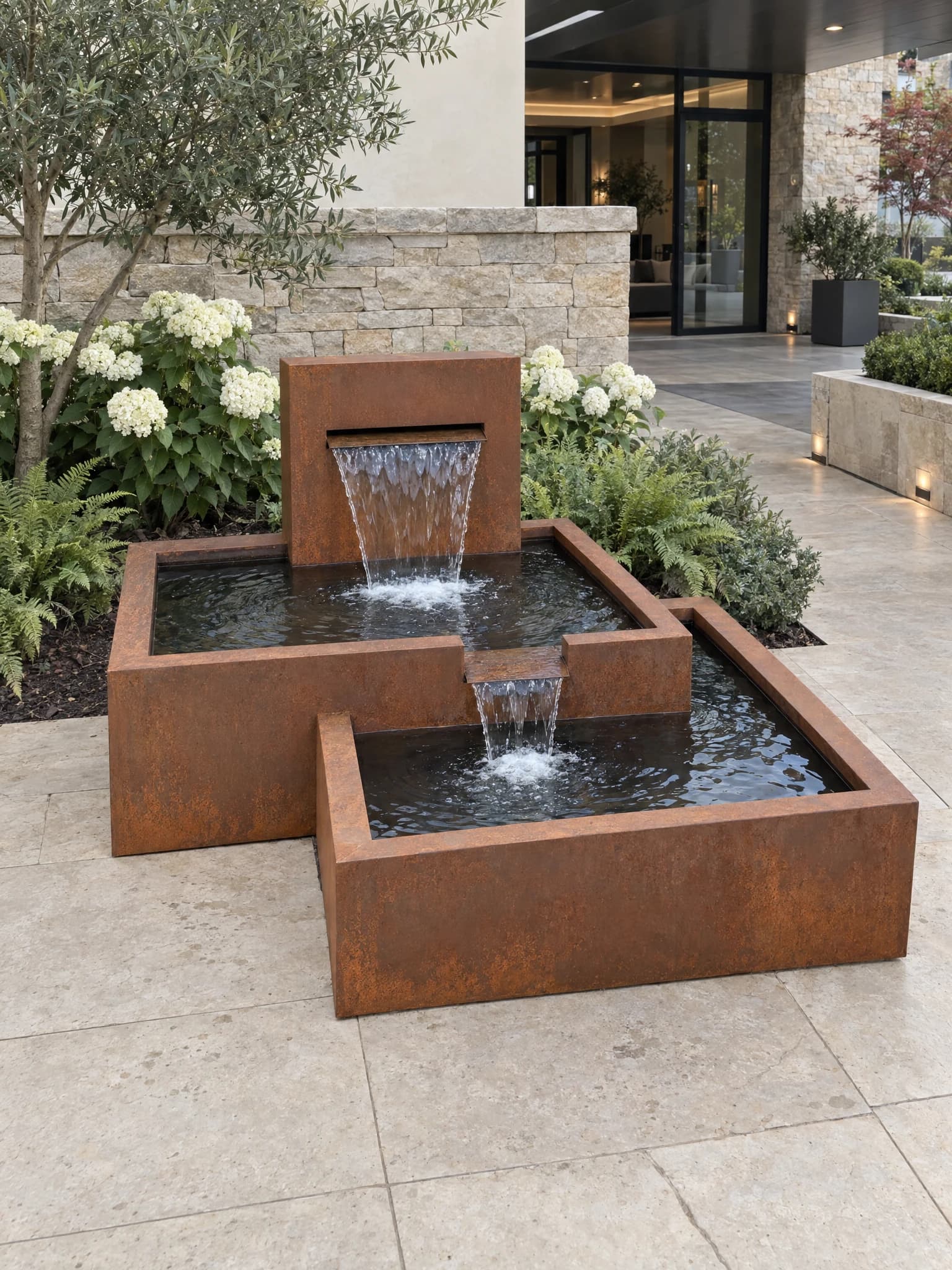
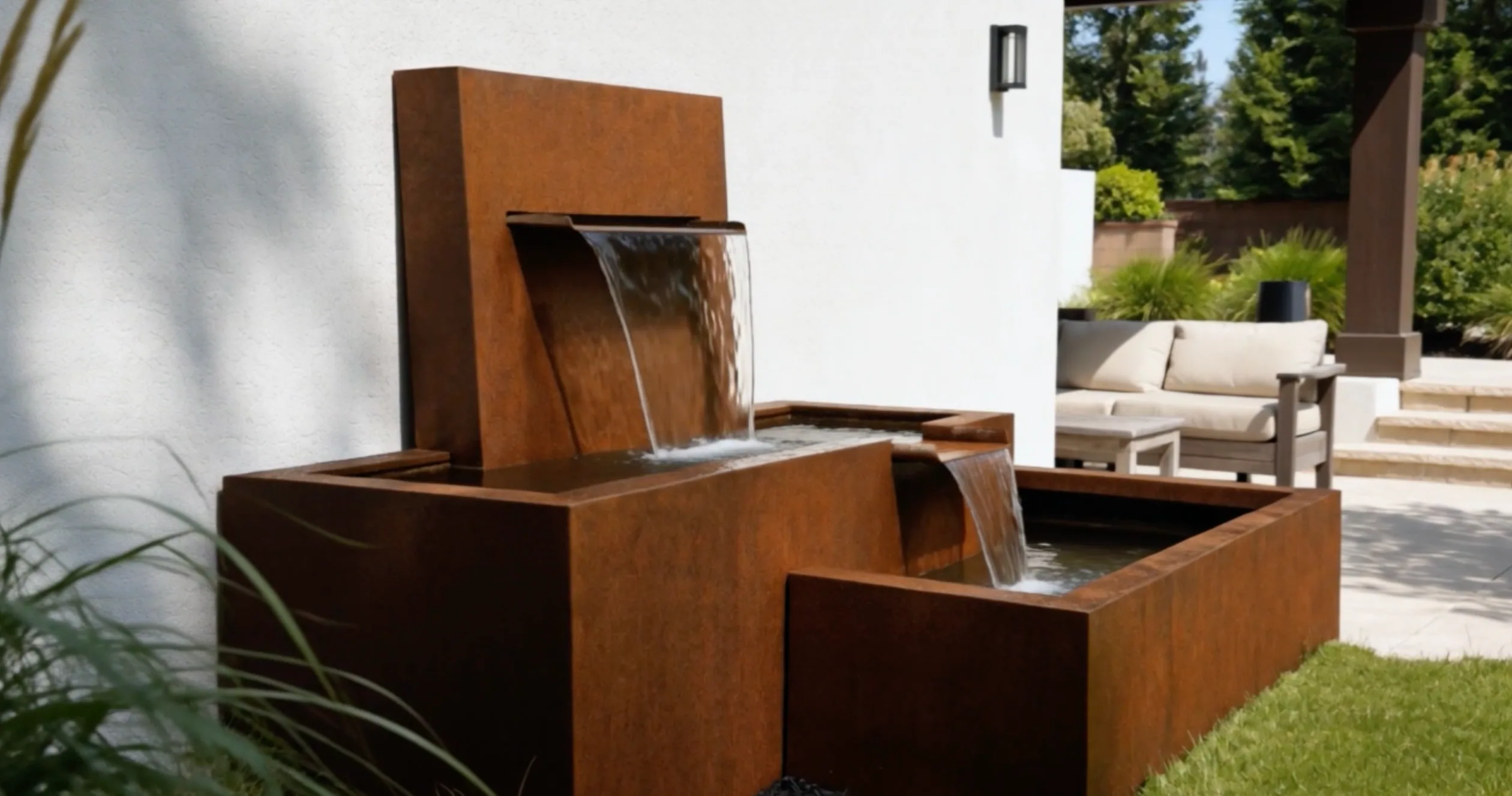
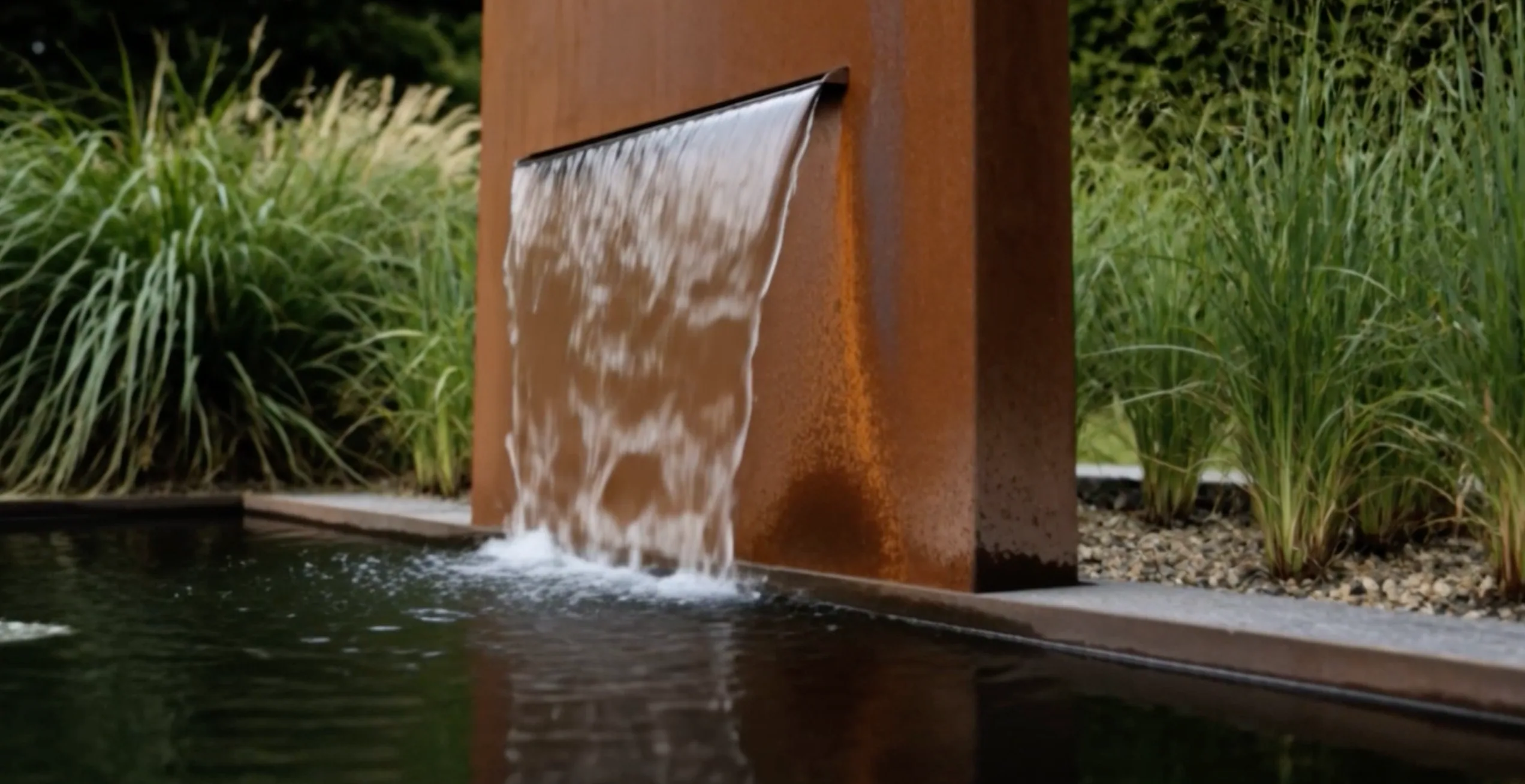
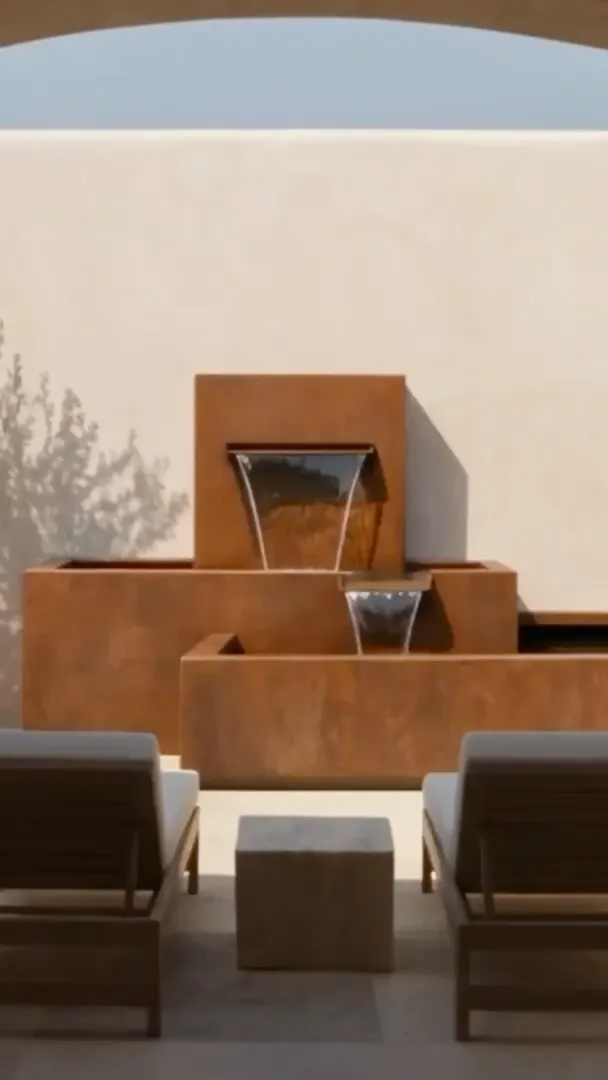
The Nereida cascade fountain lets water fall from one basin to the next over two levels. The Léandre water wall, in 2 mm Corten steel, raises a vertical blade; the Célestin water blade sends water flowing down from a wall. These are pieces to set against something, composing a backdrop: against a façade, before a hedge or at the end of a vista.
Léandre water wall
The Léandre water wall: a vertical blade of 2 mm Corten steel at the end of a pool.
Reflecting pools: silence and reflection
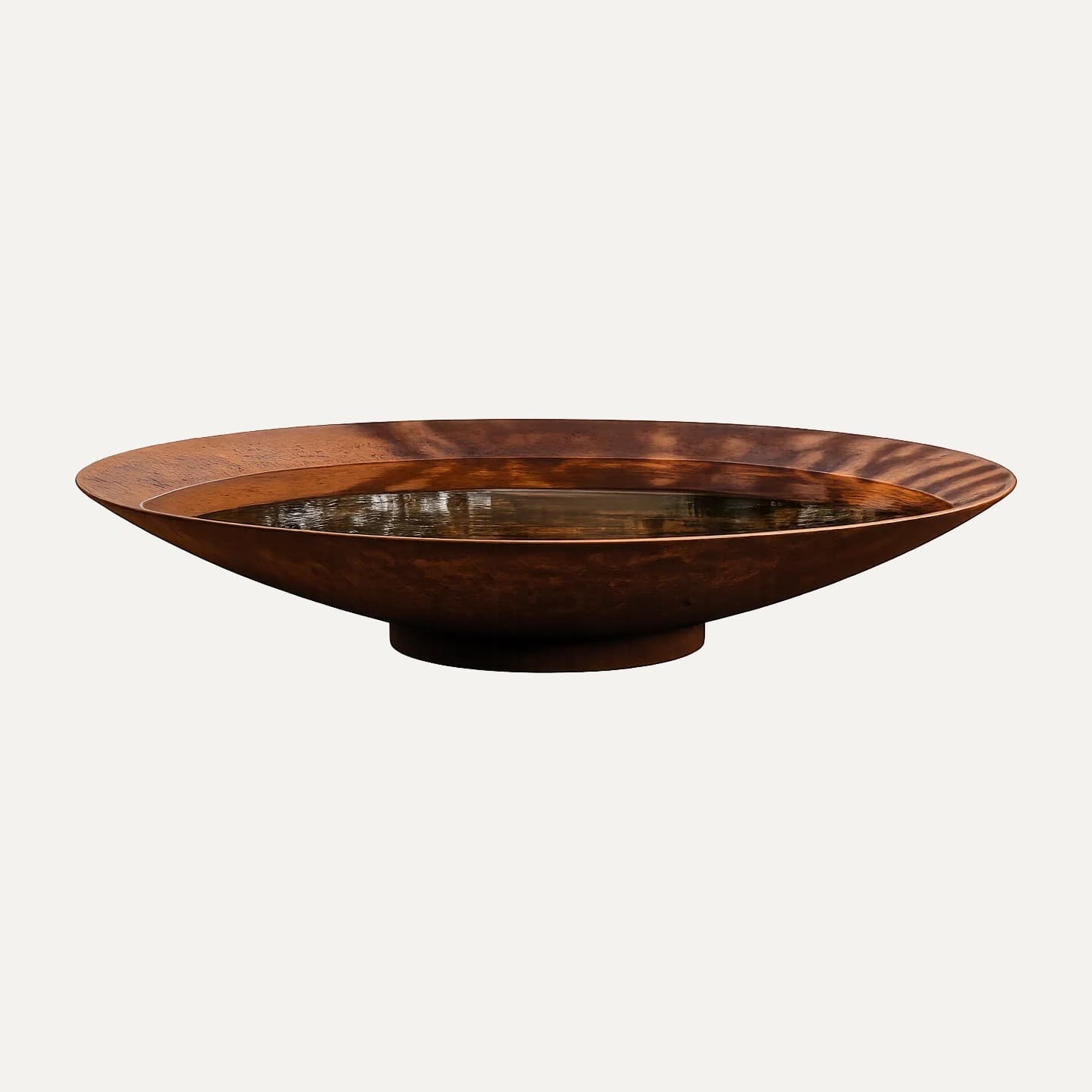
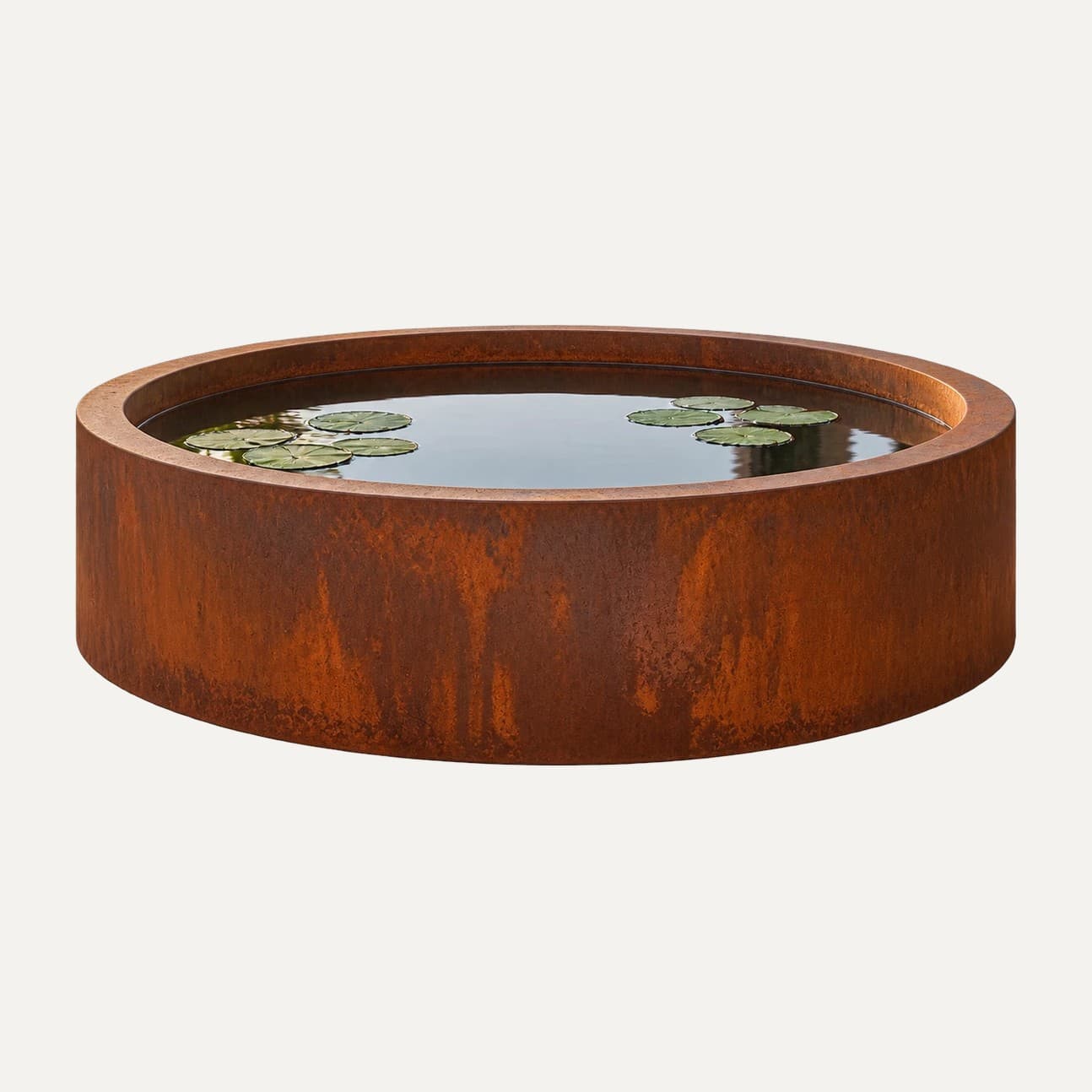
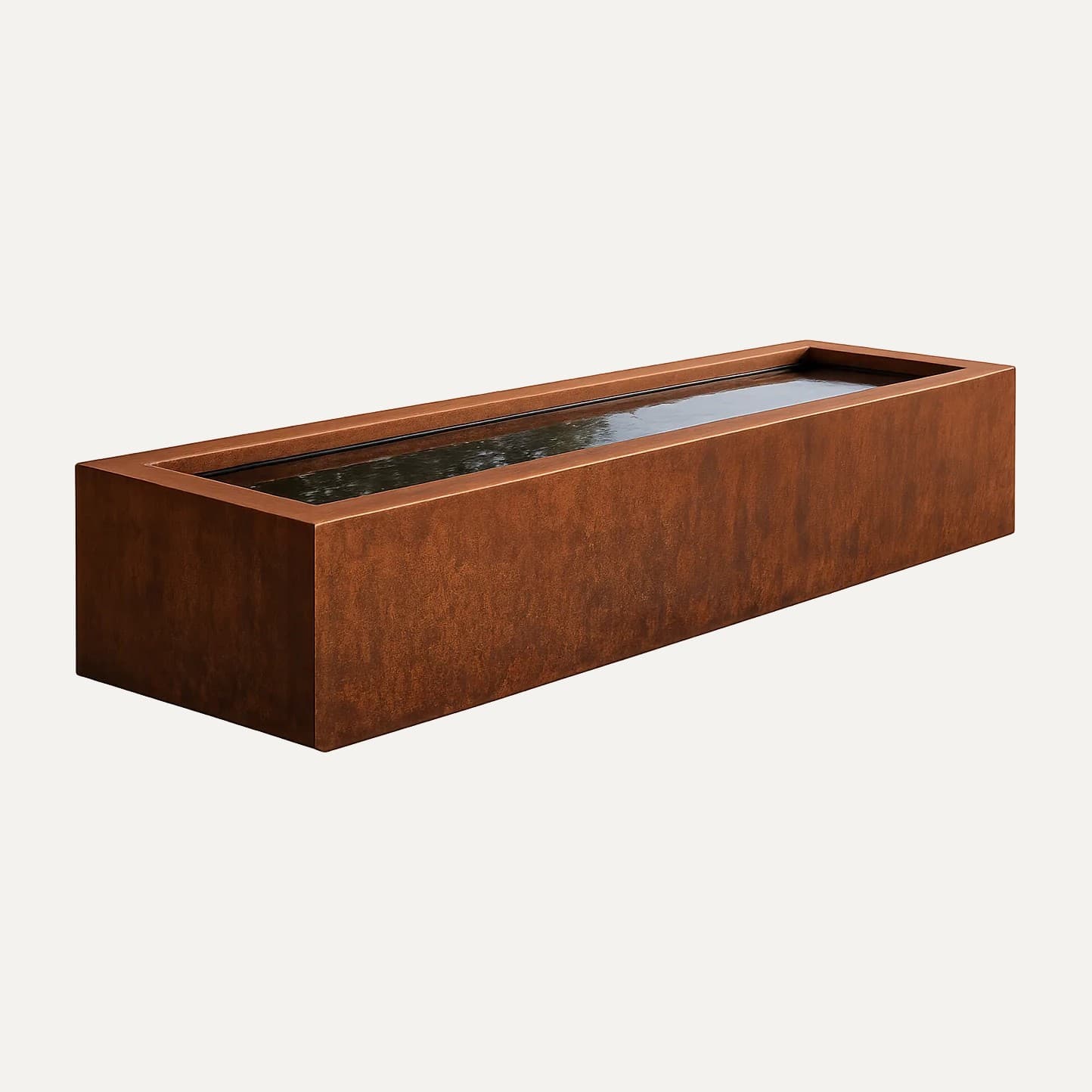
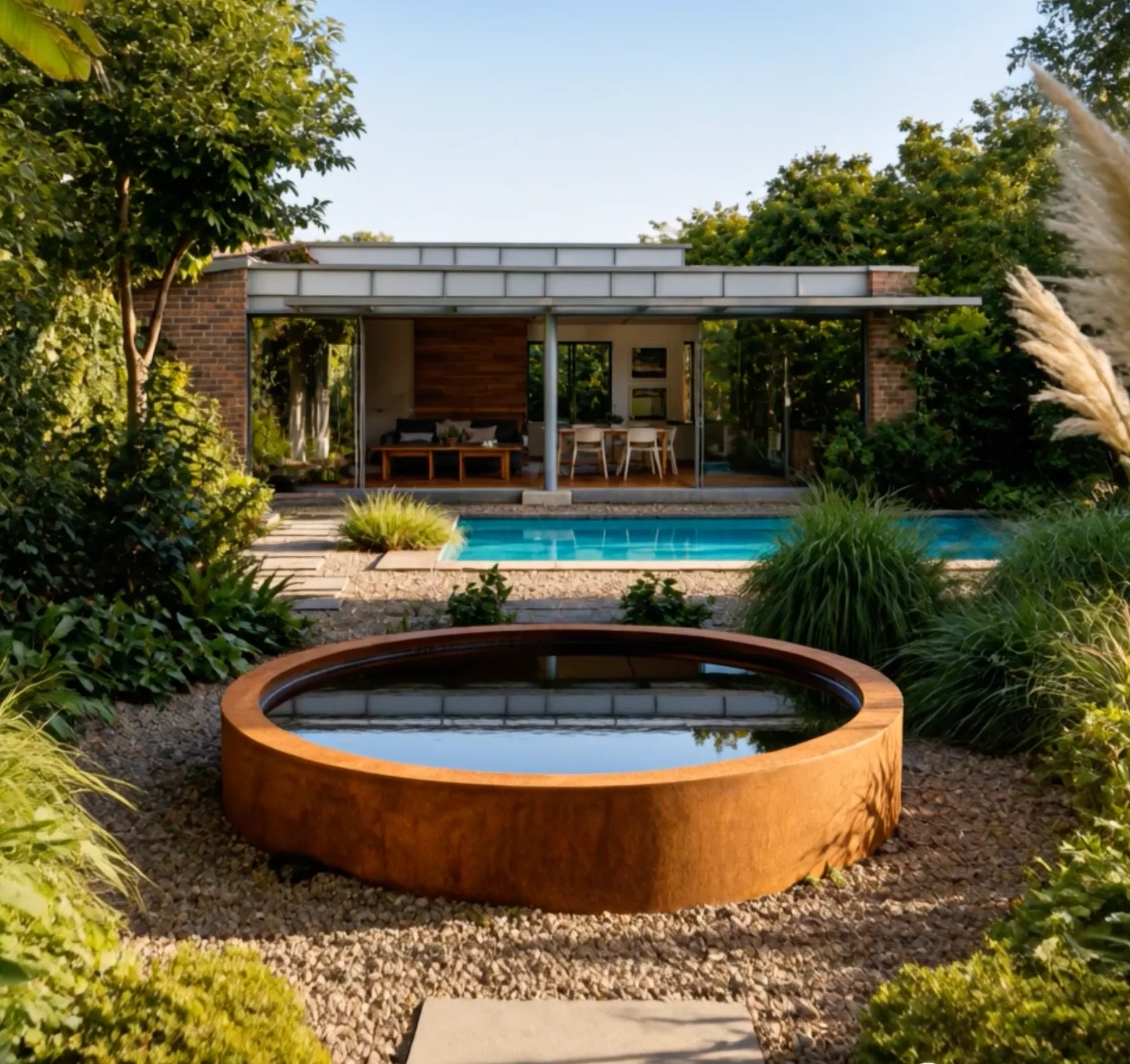
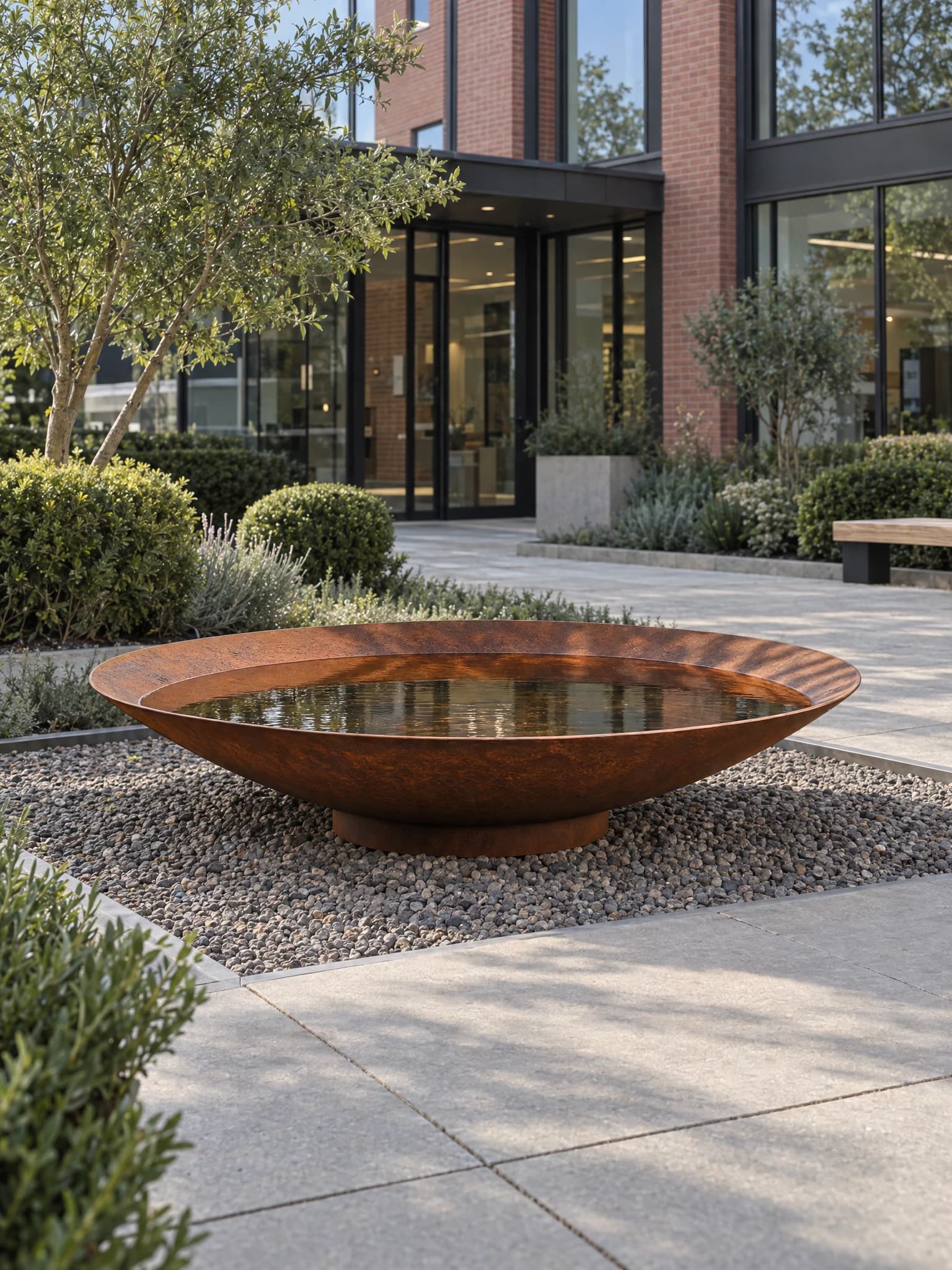
The Sélène water bowl, the Ondine round basin and the Narcisse reflecting pool, the last two in 3 mm Corten steel, have neither pump nor LEDs. They mirror the sky, sometimes host a water lily, and can be installed without any connection at all. Together, they make up the family of Corten steel water basins.
Sélène water bowl
The Sélène water bowl: a reflecting pool without a pump, installed in a matter of minutes.
Where should a Corten steel garden fountain go?
A fountain is placed first and foremost to be seen and heard from where you live: the living-room window, the terrace where you dine, the entrance. The murmur of a Corten steel water feature masks the hum of a street or the neighbours far better than a hedge; bear this in mind when choosing its orientation.
- Level, stable, load-bearing ground. A fountain full of water is heavy: a slab, concrete, pavers or a bed of compacted gravel, perfectly level. On a roof terrace or a balcony, have the permissible load checked.
- A power supply close by for models with a pump, with no extension lead trailing across the lawn.
- A considered aspect. Constant full sun encourages evaporation and green water; partial shade is ideal.
- Away from large deciduous trees, whose leaves fall into the water and clog the pump in autumn.
- A surface with nothing to fear: water running over a raw Corten steel piece can mark pale stone in the first months. A bed of gravel or pebbles around the base is both beautiful and prudent.
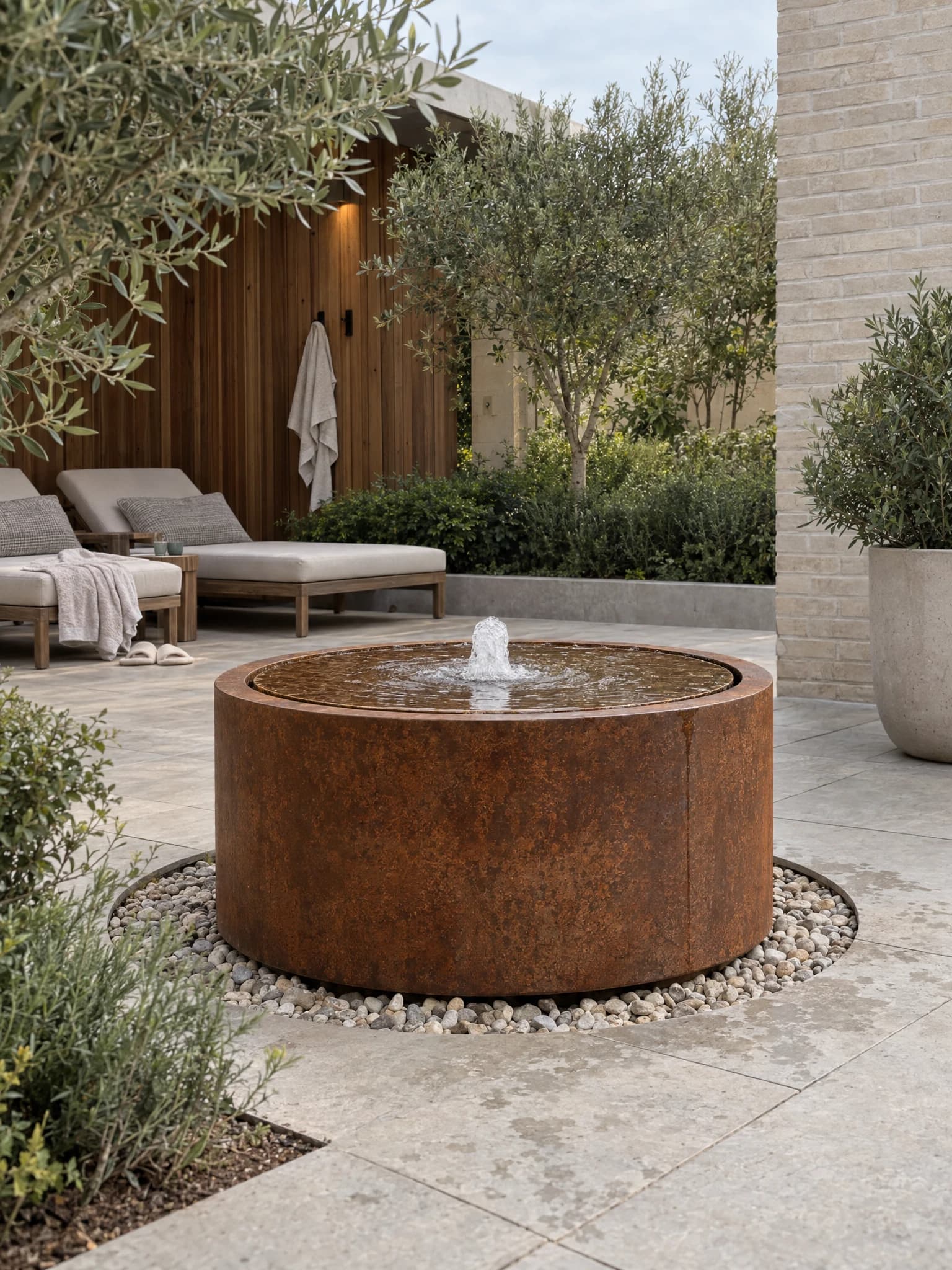
Elio round fountain
The Elio round fountain on a ring of pebbles: the base can breathe and the stone stays clean.
The electrics: a safe socket, fitted by a professional
Cortenys jet fountains and cascades have a built-in pump and LED lighting. They plug into an outdoor socket, which must be weatherproof, rated for outdoor use and protected by a residual-current device, in line with the electrical regulations of your country. Have this socket fitted or checked by a qualified electrician, who will also be able to run a buried cable in a protective duct out to the fountain.
The Sélène, Ondine and Narcisse reflecting pools need no connection at all: that is their great freedom. Set them down, fill them, and they are in place.
Filling your water feature, step by step
- Set the empty fountain on its base and check the level in both directions: a sheet of water only flows evenly if the piece is perfectly true.
- Rinse the inside with clean water to remove any dust from transport.
- Fill with clear water, rainwater or tap water, up to the indicated level, making sure the pump is always submerged.
- Switch on and let it run for a few minutes: the water drives the air out of the circuit and the flow settles.
- If the pump allows, adjust its flow to obtain the sound and the jet height you want, without splashing outside the basin.
A pump must never run dry. In summer, evaporation lowers the level faster than you might think: get into the habit of topping up regularly, especially during hot, windy spells.
 Film
FilmCaring for an outdoor Corten steel fountain
A Corten steel fountain is looked after like a small pond. What matters most is the quality of the water, which must stay clear and be renewed, never left to stagnate.
- Remove the leaves and debris that fall into the water before they decompose.
- Clean the pump’s filter or strainer from time to time: a weakening flow is often the sign.
- Renew the water regularly, more often in summer.
- Use neither bleach, nor chlorine, nor abrasive products: they attack the patina and the metal.
- Simply wipe the outside with clean water if limescale deposits appear.
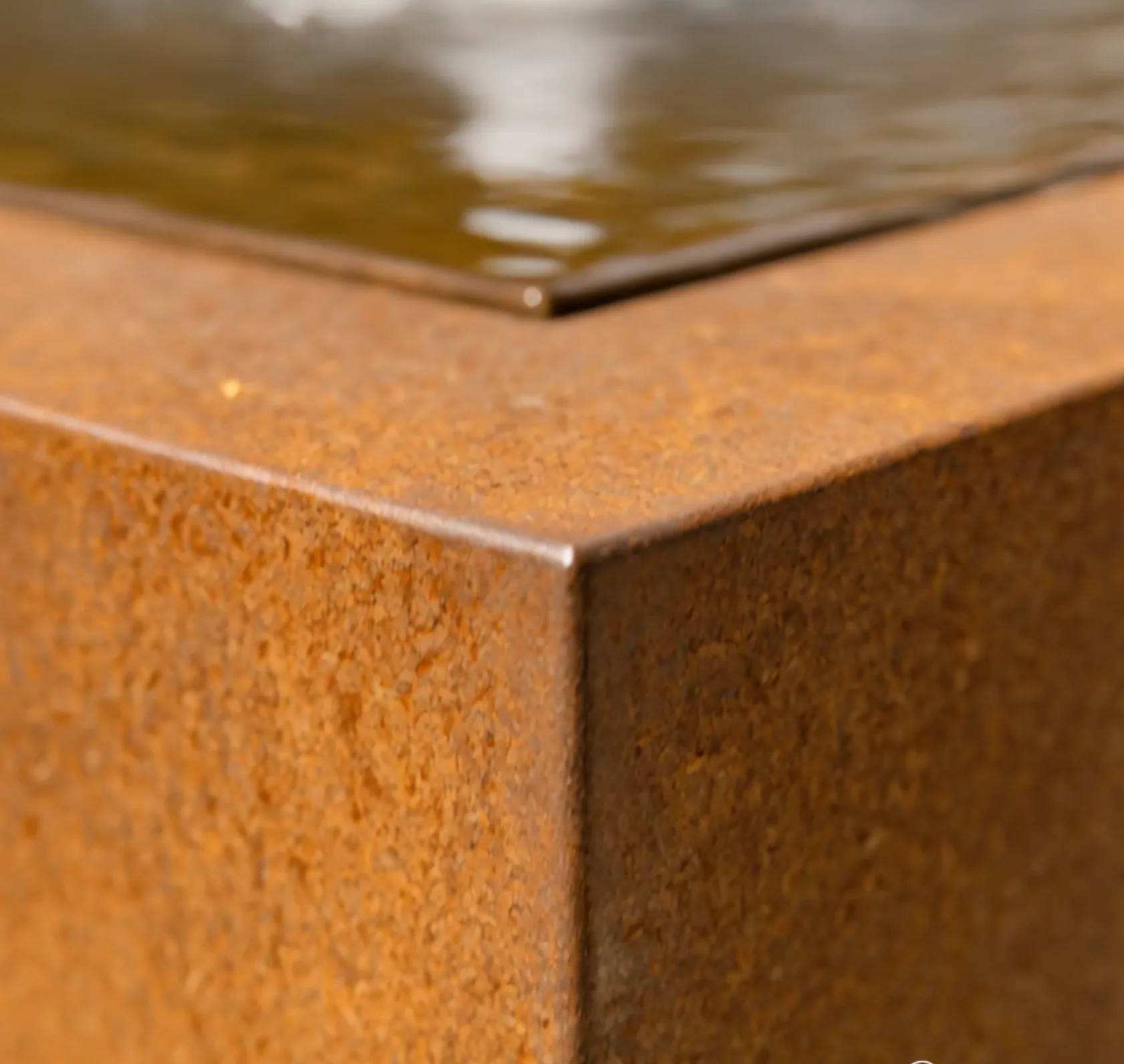
The patina on the outside needs nothing at all: it forms and renews itself on contact with the air. For a fountain standing on pale stone, beside a pool or on a precious terrace, the protective varnish fixes the patina and keeps run-off at bay. Our guide Corten steel care sets out these habits in detail.
Winter: drain it and store the pump
Water expands as it freezes. Before the first frosts, drain the fountain, remove the pump and store it somewhere frost-free until spring. The Corten steel piece itself stays outside: empty, it comes through the winter without difficulty, and its patina goes on living. In mild regions where it never freezes, the fountain can run all year round; keep an eye on cold nights all the same.
Reflecting pools without a pump are emptied in the same way before hard frosts, or left half full in gentle climates. In spring, a rinse and fresh water, and the fountain finds its voice again.
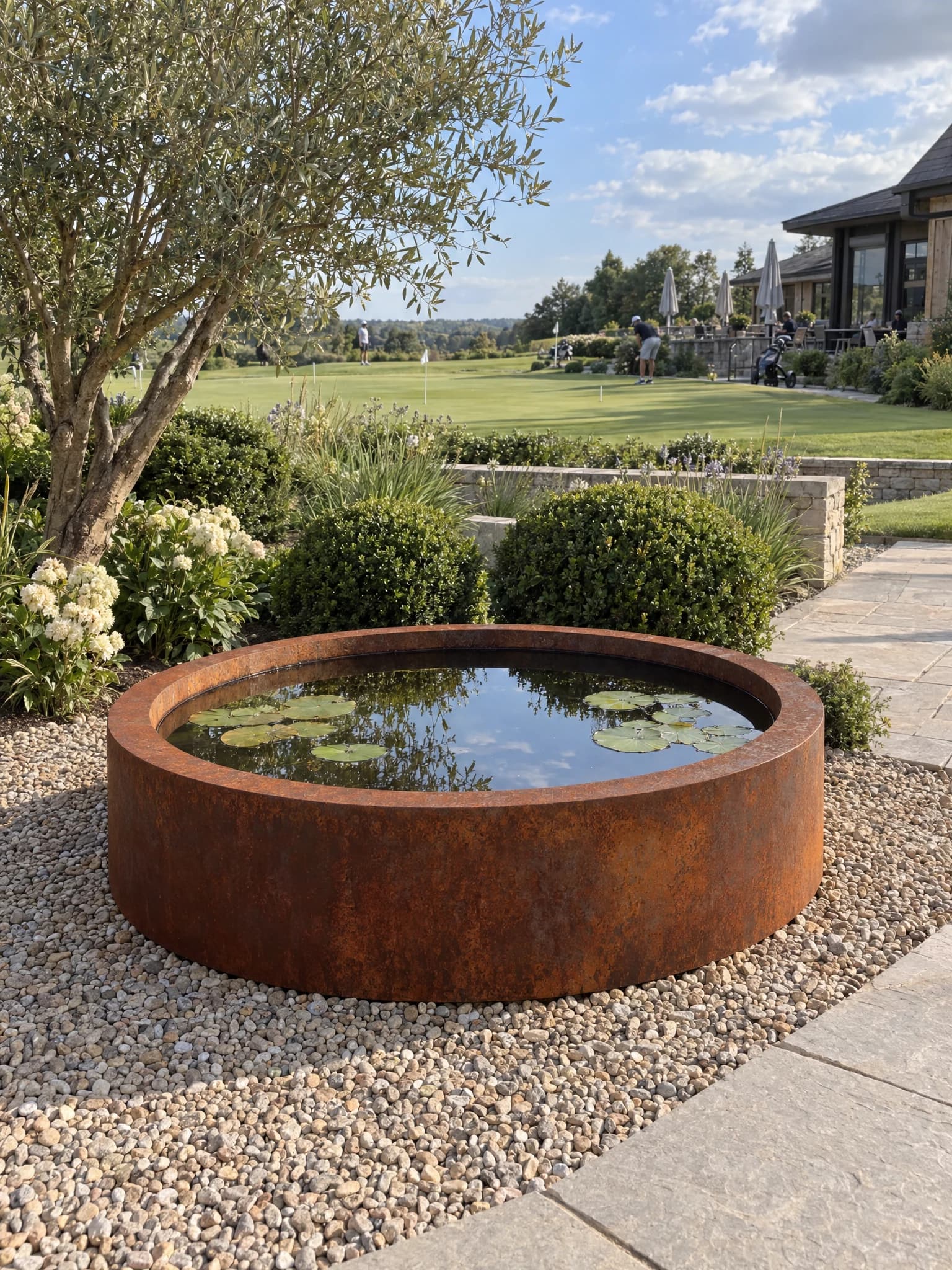
Ondine round basin
The Ondine round basin, in 3 mm Corten steel: a reflecting pool without a pump, where a few water lilies grow.
A fountain by the sea or beside a swimming pool
Salt and chlorine prevent the patina of Corten steel from stabilising. Right on the coastline, or if the fountain is to receive pool water regularly, the House will steer you towards its powder-coated aluminium fountains, designed in the same spirit: the Nereida aluminium cascade fountain or the Alban aluminium square fountain. Everything is explained in our guide Corten steel near the sea.
Every Corten steel fountain from the House is designed in France, crafted in Europe to order and delivered with its signature patina. Allow 2 to 5 weeks for a collection piece and 3 to 10 weeks for a bespoke project made to your dimensions. All are guaranteed for two years.